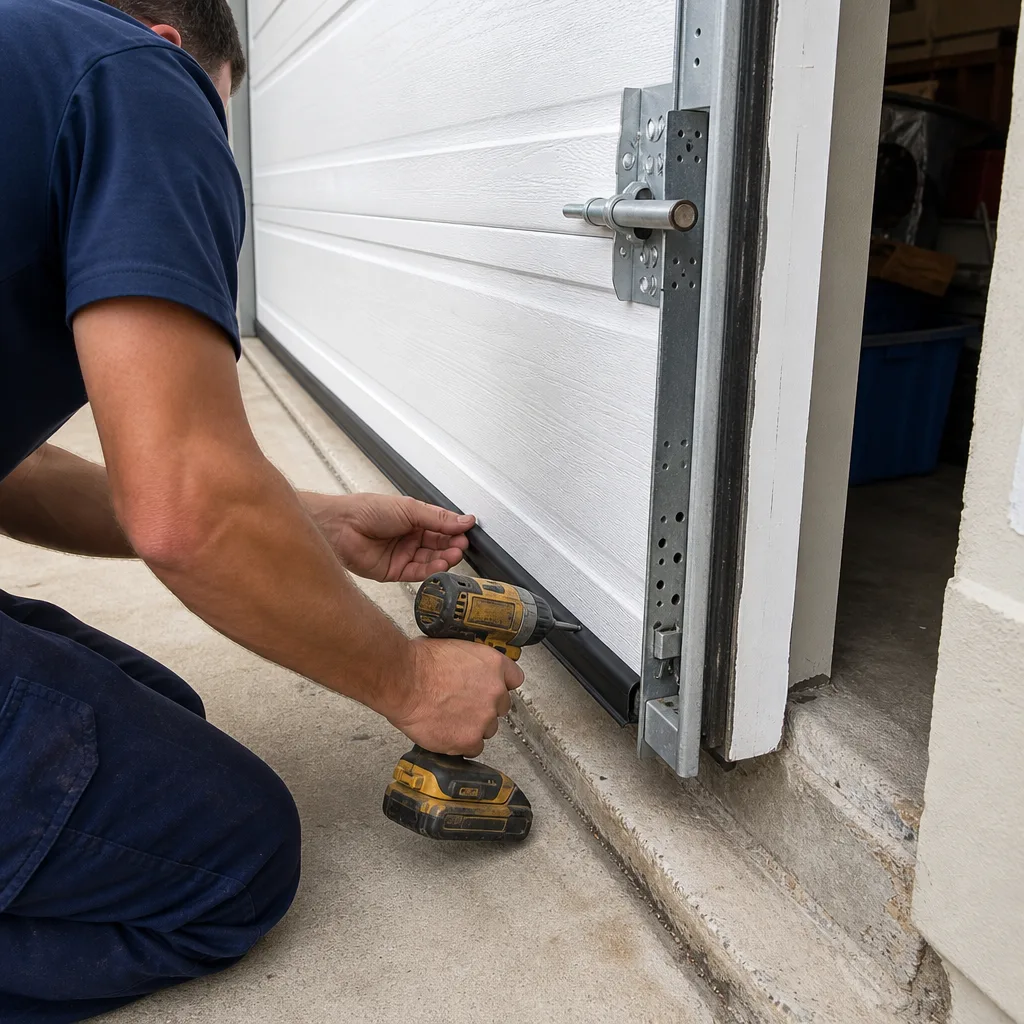
Last updated November 21, 2026
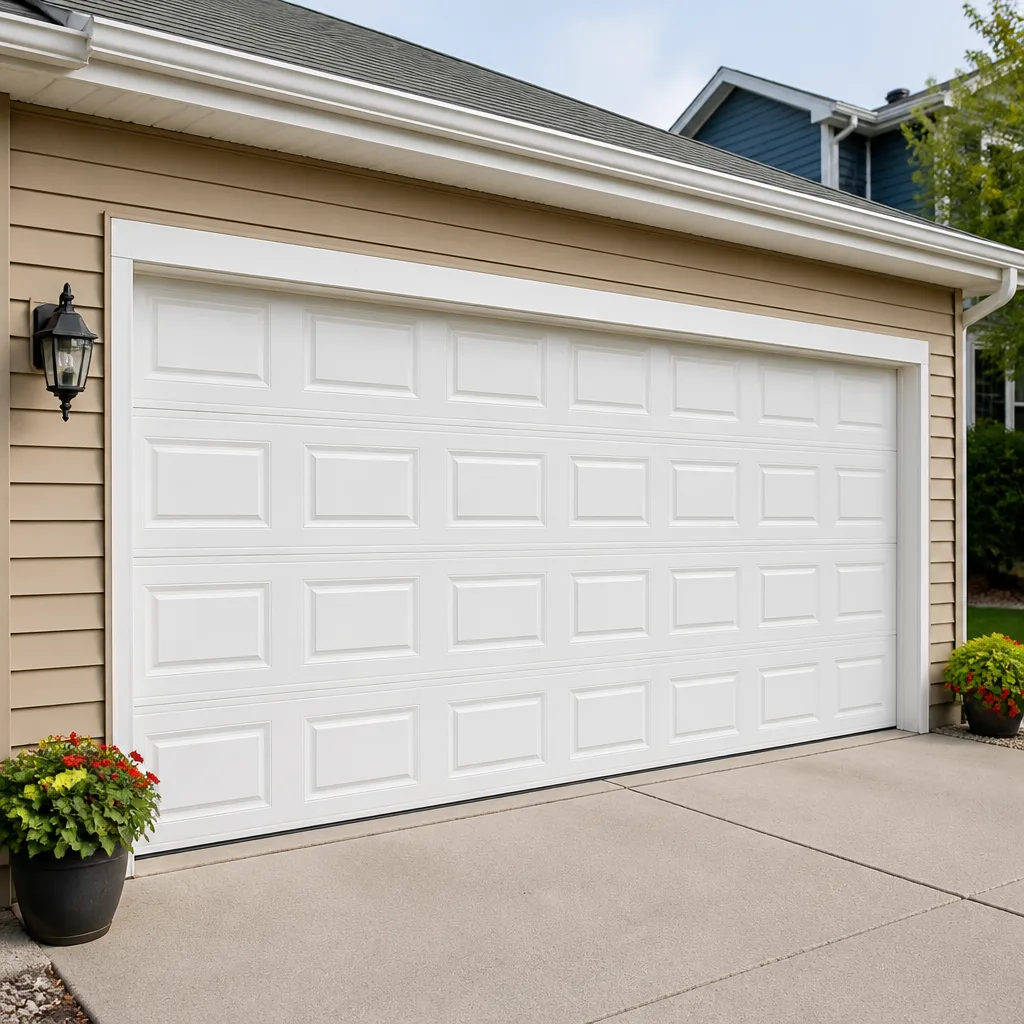 Raised-panel steel
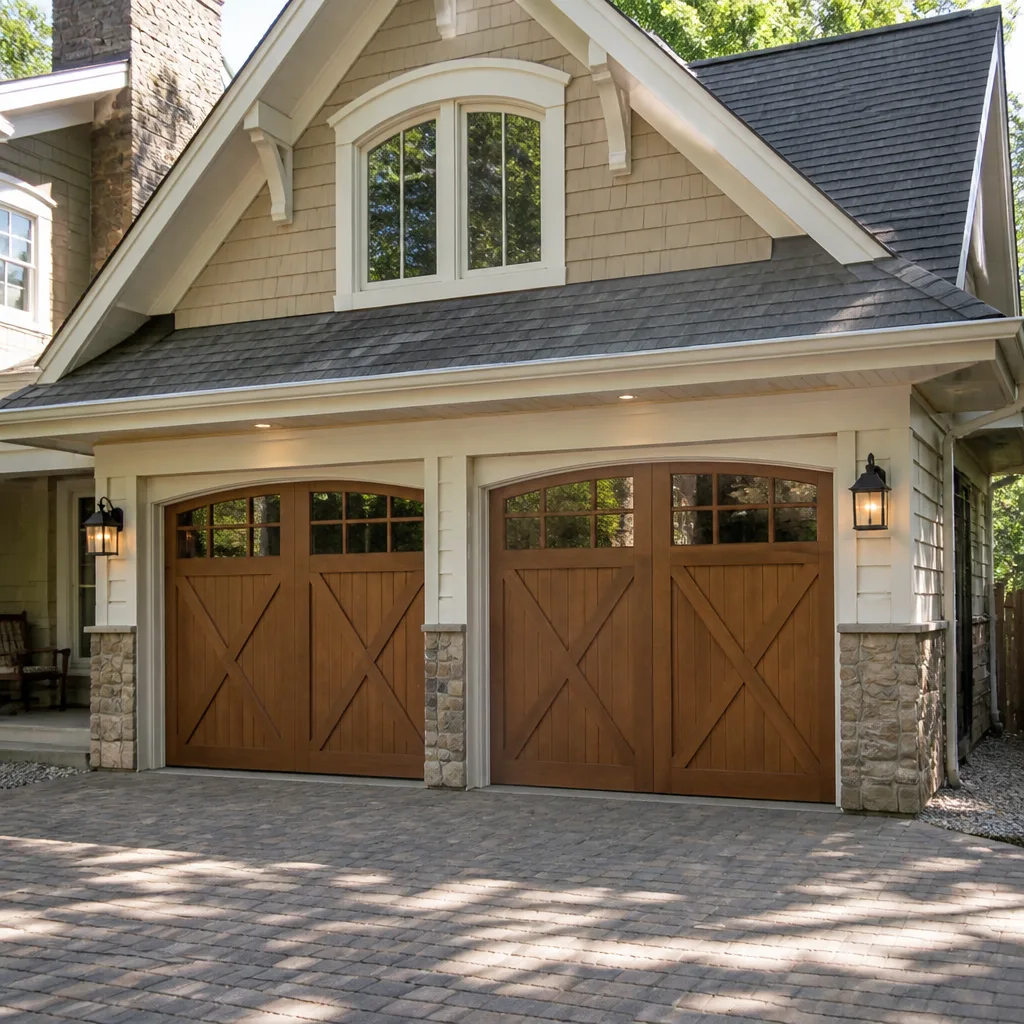 Carriage house
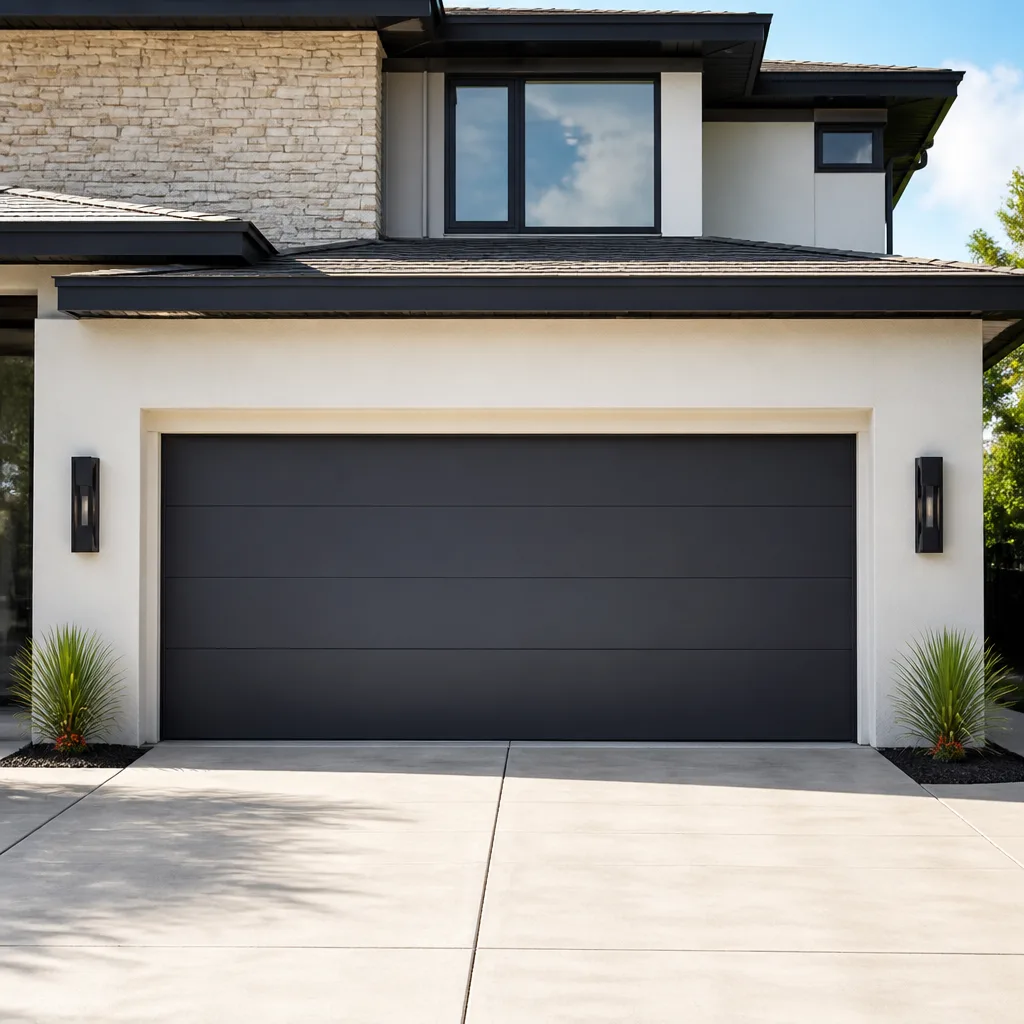 Modern flush
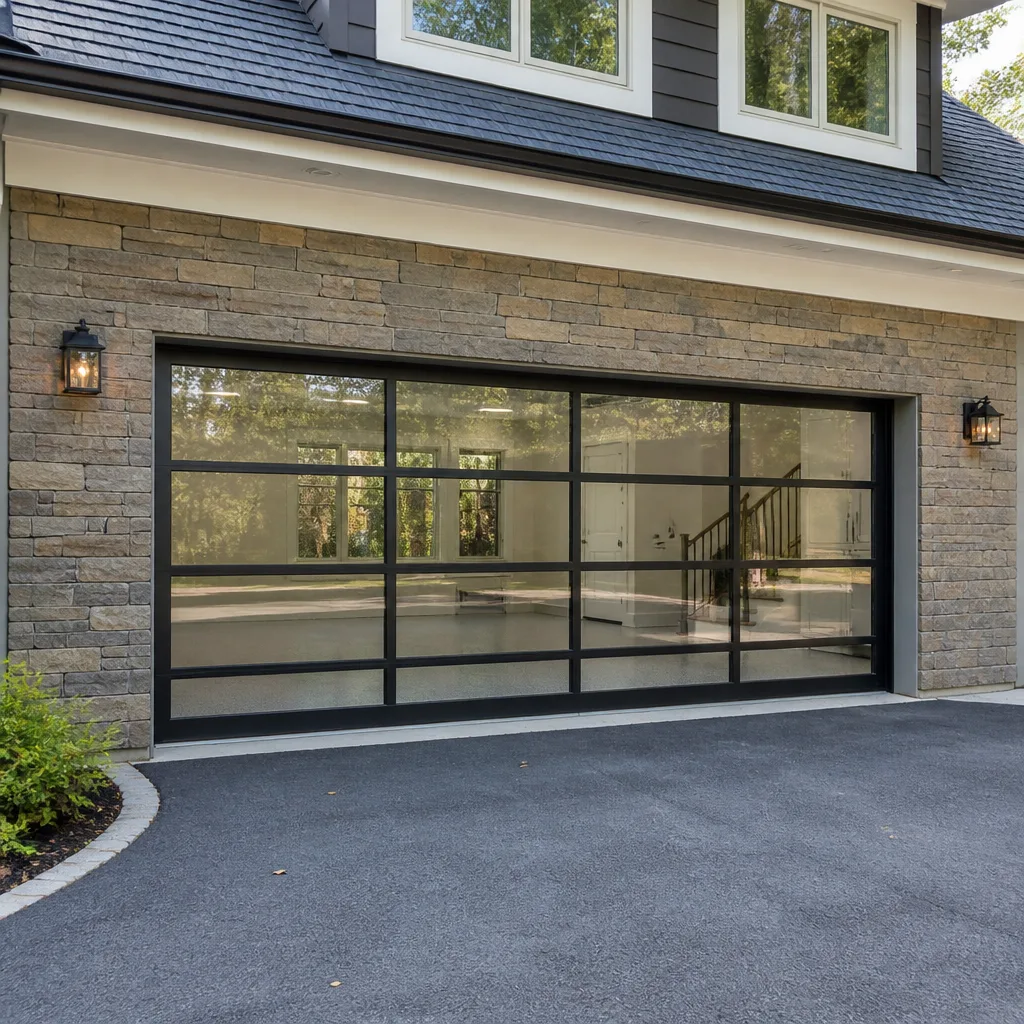 Full-view glass
 LiftMaster openers
 Chamberlain openers
Full 25-point door and opener safety check with every visit - springs, cables, rollers, tracks, and your LiftMaster or Chamberlain opener included
You get a price before we start. It does not change when the pro arrives.
Get your free estimateDIY vs Professional Garage Door: The Galveston Homeowner’s Decision Guide
Torsion spring replacement isn’t a “difficult DIY.” It’s a task where the energy stored in a wound spring can break a wrist or worse in a fraction of a second, and no tutorial changes that physics. That distinction matters more in Galveston than in most places, because the same door that stores that energy also sits inside one of the country’s more demanding wind zones. This guide walks through the question the way we actually answer it for homeowners: task by task, with the stakes laid out clearly. You’ll learn which jobs you can safely do yourself, which ones carry injury, insurance or code consequences, and how to spot a repair kit that won’t hold up here.
Quick Answer
Roughly 70 percent of garage door repairs are best left to a trained technician, while simple maintenance like lubrication, sensor alignment and remote reprogramming is safe to do yourself. Springs, cables and any work tied to windstorm-compliant installation belong with a licensed professional. In Galveston specifically, DIY installation inside a TDI wind zone without the proper documentation can put your windstorm coverage at risk, which is a cost no DIY saving justifies.
Styles & brands we work with
- Raised-panel steel
- Carriage house
- Modern flush
- Full-view glass
- LiftMaster openers
- Chamberlain openers
Table of Contents
- Why Garage Door DIY Is Different From Other Home Projects
- Task-by-Task: What’s Safe to DIY and What Isn’t
- The Stored-Energy Problem: Why Springs Are Their Own Category
- The Galveston Insurance Angle: Wind Zones and WPI-8 Forms
- When DIY Makes Financial Sense
- How to Evaluate a Garage Door Repair Kit for Galveston
- How to Choose a Professional in Galveston
- Typical Costs: DIY vs Professional
Why Garage Door DIY Is Different From Other Home Projects
Most home repairs fail gracefully. A bad caulk line looks sloppy. A wrong light fixture flickers. A garage door doesn’t work that way. When something goes wrong with the torsion system, the failure is sudden, loud and physical: the spring releases stored energy that was never meant to be released uncontrolled, and it happens in a space where people stand. That’s the core reason garage door work sits in a different category than most of the repairs a capable homeowner learns to handle.
The second reason is regulatory. Garage doors are openings in the building envelope, and in Galveston the building envelope is governed by wind-load rules that most inland homeowners never encounter. The island sits inside a designated wind zone, and installing or replacing a garage door opening means documented compliance. An install that skips that paperwork can affect insurance coverage on the whole structure, not just the door. That’s a consequence you don’t see with a DIY bathroom tile job.
Third, modern garage doors are heavier and more integrated than their reputation suggests. A standard double door runs hundreds of pounds, balanced by springs calibrated to its exact weight, driven by an opener that expects specific torque and speed. Add smart-home openers like LiftMaster’s myQ or Genie Aladdin Connect and you’ve got electronics layered on top of mechanical systems. Fiddling with one layer without understanding the others tends to create new problems rather than fix old ones.
None of that means every repair requires a technician. Plenty of jobs genuinely don’t. What it means is that “can I do this myself?” is the wrong first question. The right one is “what happens if I get it wrong?” Once you frame it that way, the list of safe homeowner tasks becomes much clearer, and so does the list of jobs that should never be a weekend project.
Task-by-Task: What’s Safe to DIY and What Isn’t
This is the breakdown we give when a Galveston homeowner asks whether they should attempt a repair. It isn’t about skill level. It’s about which tasks fail safely and which ones fail dangerously.
Safe for a competent homeowner
- Lubrication. Weather stripping, hinges, rollers and the track benefit from periodic lubrication. A garage door lubricant, applied to moving metal parts, reduces noise and wear. This is a genuine DIY win.
- Safety sensor alignment. If the door reverses on the way down or won’t close at all, the photo-eye sensors near the floor are often misaligned or blocked. Straightening and cleaning them is simple and safe.
- Remote and keypad reprogramming. Pairing a new remote, changing a keypad code or resetting an opener after a power outage is straightforward. Your opener’s manual walks you through it, and most brands like LiftMaster, Chamberlain and Craftsman follow similar patterns.
- Weather stripping replacement. The bottom seal takes a beating in Galveston’s humidity and heat. Swapping it is a common homeowner job.
- Visual inspection. Look for frayed cables, bent tracks, worn rollers and gap in the bottom seal. Noticing a problem early is the most valuable thing you can do yourself.
Not safe for a homeowner
- Torsion spring replacement. Covered in depth below. This is the one job that should never be attempted without training and proper tools.
- Cable replacement. Cables are under constant tension and can cause serious injury if they slip or snap during handling.
- Track realignment after structural damage. A bent track can indicate a larger balance problem. Adjusting it without diagnosing the cause risks the door coming off its track.
- Opener replacement or rewiring. The electrical work involved is a safety matter. Leave it to a licensed professional.
- Any installation or replacement of the garage door opening itself. In Galveston this is where compliance comes in, and it’s covered in the insurance section below.
When a job lands in the second list, our garage door repair service handles it safely and without guesswork. The general principle: if the task involves stored energy, tension or the building envelope, a professional should be doing it.
The Stored-Energy Problem: Why Springs Are Their Own Category
Torsion springs don’t fail because they’re complicated. They fail because they store a large amount of energy in a small space, and releasing that energy without control is dangerous regardless of how carefully you follow instructions. A wound torsion spring is holding back the weight of the door plus the force needed to lift it. When it breaks or slips during handling, that energy goes somewhere. Often that somewhere is a person’s hand or arm.
That’s why spring replacement belongs to a different category than every other garage door repair. Understanding the physics isn’t the same as handling the physics. No video, no written guide and no amount of confidence changes the forces involved. This is the one task where the honest answer is: don’t. Not because you couldn’t follow the steps, but because the failure mode is unforgiving.
There’s a second layer specific to Galveston. Springs are rated by cycle count and matched to the door’s exact weight. A spring meant for a lighter door, or one installed with incorrect winding, will fail early or leave the door unbalanced. An unbalanced door strains the opener, wears the tracks and can eventually cause structural damage. Spring selection and winding require knowing the door’s weight, the correct spring size and the required torque. Buying a generic spring off a shelf and guessed-at winding is a recipe for a door that fights itself.
This is why we treat garage door spring repair as a specialized service rather than a general repair. Springs are the most dangerous part of any garage door, and that’s why we handle them so carefully. We measure, match, wind and test the door’s balance before it goes back to work. If you’ve heard the sharp snap of a breaking spring and the door won’t lift, that’s a call worth making rather than a problem to attempt on your own.
The Galveston Insurance Angle: Wind Zones and WPI-8 Forms
Here’s the part of the DIY question most homeowners never hear until it bites them. Galveston sits inside a designated wind zone, and openings in the building envelope here are subject to windstorm compliance rules. That means installation or replacement of a garage door opening may require documentation of the work, and one of the key documents is a WPI-8 form, which certifies windstorm-resistant construction to the Texas Department of Insurance. Skipping that documentation can affect your windstorm coverage on the entire structure, not just the garage.
Read that again, because the consequences are bigger than the door. A garage door opening isn’t a decorative feature. It’s part of the sealed envelope that the wind pushes against. If the insurance side of the equation gets muddled, you can end up with a door that looks fine but a policy that no longer protects the house the way you thought. The savings from a DIY install can be erased many times over by a coverage denial during a claim.
What this means practically:
- Before any install or replacement of the garage door opening in Galveston, confirm what documentation your windstorm coverage requires.
- Ask your insurer directly whether they require a WPI-8 form for the opening you’re changing.
- Use a licensed professional who can produce the paperwork, not just complete the install.
- Keep the documentation with your home records. Future owners will need it too.
Repairs that don’t change the opening itself, like an opener fix or a spring swap, generally don’t trigger this. Installation and replacement do. If you’re planning new Galveston Garage Door Repair Pros work, make compliance part of the conversation from the start, not an afterthought.
When DIY Makes Financial Sense
We’re not going to tell you every garage door job needs a professional. There are repairs where the math clearly favors doing it yourself, and we’d rather you spend your money where it matters.
- Keypad and remote programming. Replacing a keypad or reprogramming a remote costs almost nothing in parts and takes a few minutes. Brand-specific instructions exist for every common system, from LiftMaster to Craftsman.
- Weather stripping and bottom seals. The seals on a Galveston door take real wear from heat and humidity. Replacement seals are inexpensive and the swap requires no special tools.
- Minor dent repair on non-structural panels. A cosmetic dent on an Amarr or Wayne Dalton steel panel can sometimes be improved with a suction tool or careful work. Don’t attempt this on a panel that’s bent enough to affect the door’s track alignment.
- Routine lubrication and sensor cleaning. Low cost, low risk, real payoff in reduced wear and fewer false reversals.
- Safety reversal testing. The monthly test of your door’s auto-reverse function is a two-minute job and it’s one of the most useful things you can do for your household’s safety.
Where DIY stops making financial sense is at the moment any repair requires lifting the door off its track, touching the torsion system or changing the opening. That’s not a skill judgment. It’s a hedge against a failure that costs far more than the repair. If you’re ever unsure which category a job falls into, our technicians have up to 11 years of experience and can tell you honestly whether it’s a DIY job. A quick call to (866) 412-5303 settles it.
For opener issues specifically, our garage door opener repair covers everything from a dead legacy Craftsman unit to a myQ or Aladdin Connect system that won’t respond. These jobs often look simple and aren’t, because the opener is doing very little visible work while coordinating a lot behind the scenes.
How to Evaluate a Garage Door Repair Kit for Galveston
A repair kit bought online and installed at home can work fine for some jobs. For others, it’s a shortcut that fails the first time the door meets real load. Here’s how to judge whether a kit belongs on your door in Galveston.
- Check the torque spec. A kit intended for a door in a wind zone should state the torque specification it’s designed for. If a listing doesn’t mention torque at all, it’s probably a generic part meant for inland suburbs where wind load and door weight vary less.
- Look for the hardware grade on fasteners. A spring or track kit installed with low-grade fasteners will loosen under repeated load. If the listing doesn’t specify the grade, assume the cheapest available.
- Confirm the spring rate matches your door weight. “Fits most doors” is a warning sign, not a feature. Springs are matched to a specific door weight, and a generic spring will overwork your opener or wear out early.
- Check whether the kit includes winding bars and instructions for a specific spring size. Springs are supplied in matched pairs, and the certification or matching should be documented. If the kit doesn’t say what it’s matched to, ask.
- Read the reviews looking for door weight and cycle lifespan, not just ease of install. Install difficulty is not the same as durability, and the cycle count a spring is rated for matters more than how quickly it goes in.
- Confirm the kit honors the door’s warranty. Amarr, Raymond and other manufacturers may void component warranties if unapproved parts are installed. Check before you spend.
None of this is meant to talk you out of a kit for a genuinely simple repair. It is meant to help you spot the difference between a kit that matches your door and one that just fits the box.
How to Choose a Professional in Galveston
If you’ve decided a job should go to a professional, the next question is which one. In Galveston, the differentiators matter more than they do inland, because the wind-zone and insurance side of the work changes who’s qualified to do it.
- Ask about wind-storm compliance experience. A professional who installs or replaces garage door openings in Galveston should be fluent in WPI-8 documentation and the wind-load rules that apply to openings. An installer who owns a truck and a ladder isn’t automatically qualified for that side of the job.
- Confirm brand familiarity with your specific door or opener. Factory-familiar technicians diagnose faster and source correct parts without guesswork. We work on the brand you already own: Amarr, Wayne Dalton, Craftsman, Raynor and the rest of the eight brands we service.
- Ask about the spring replacement process. A real spring service matches the spring to the door weight and tests balance after winding. A general handyman who says “I’ve done a few” should not be winding torsion springs inside your home.
- Check whether the company can handle the full lifecycle. Repair, opener repair, spring repair and installation under one roof means no second call when the job grows. If the first technician refers you out for the next stage, you’ve wasted a visit.
- Ask for the price in writing before work starts. The written estimate is the price. Anyone who won’t commit to that before the first wrench turns isn’t the professional you want.
For urgent failures like a door stuck open or a spring that snapped mid-morning, emergency service matters more than a full afternoon of shopping around. One call covers it, and that’s the point of having a single specialist for the whole lifecycle.
Typical Costs: DIY vs Professional
Homeowners ask us all the time whether the DIY price actually saves money. Sometimes it does. Sometimes it doesn’t come close. Here are typical ranges for the jobs in this guide, framed so you can compare the way we see them.
| Task | Typical DIY parts cost | Typical professional cost (estimate) |
|---|---|---|
| Lubrication and inspection | $10-$25 in lubricant | Often bundled into a repair visit |
| Safety sensor alignment | $0, just time | Minor charge or bundled |
| Remote or keypad reprogramming | $15-$40 for a new remote or keypad | Minor charge or bundled |
| Bottom seal replacement | $20-$50 in materials | $90-$180 installed |
| Opener replacement (single door) | Parts only, but no install guarantee | By written estimate after measuring |
| Torsion spring replacement (single spring) | Not recommended | Typically $180-$340 per spring |
| Garage door installation or replacement | Not recommended inside a wind zone | By written estimate after a free measure |
A matched pair of torsion springs is usually replaced together, so a pair costs about twice the single-spring range. On the install side, pricing depends on door size, brand and the compliance documentation required in Galveston, which is why we measure and quote rather than quote blind. If you’re researching a new door, we’ll give you a written price after measuring, and the price we quote is the price we work to. Every estimate is free, and the number is agreed before any work begins.
When the job is a straight repair rather than an install, same-day service is often possible. When you need a new door or a full replacement, the timeline is measured, ordered and scheduled. Either way, call (866) 412-5303 for an exact quote, and you’ll know the total before anyone starts.
Common Mistakes to Avoid
- Treating a spring swap like changing a light bulb. The springs hold most of the door’s weight, and winding them the wrong way or using a mismatched replacement can leave the door unbalanced or the spring ready to fail. Handle springs with the same caution you’d give a live wire.
- Installing a new door in a Galveston wind zone without asking about a WPI-8 form. The savings from a DIY install can disappear if your windstorm coverage becomes an issue during a claim. Ask before the work starts, not after.
- Buying a “fits most doors” kit for a specific door. Springs and openers are matched to weight and model. A universal kit will fit the box and often won’t fit the door. Check the torque spec and spring rate before you buy.
- Ignoring a bent track because the door still “sort of” works. A bent track usually points to a deeper balance or spring problem. Forcing the door through it wears the opener and eventually the door itself.
- Replacing an opener without checking the springs. A struggling opener often has healthy internals and tired springs behind it. Replacing the opener without checking the springs may fix nothing. Test the door by hand first, or ask a technician.
- Assuming all brands are interchangeable. An Amarr door panel isn’t the same as a Wayne Dalton panel, and a Craftsman opener doesn’t use the same myQ pairing as a LiftMaster. Brand knowledge prevents wasted parts and dead-end installs.
- Waiting until a minor issue becomes a stuck door. A slow-closing door, a noisy roller or a bottom seal that’s peeling are cheap repairs now and can become overnight emergencies later. Especially in Galveston’s heat, worn seals and stressed springs tend to get worse, not better.
See the difference
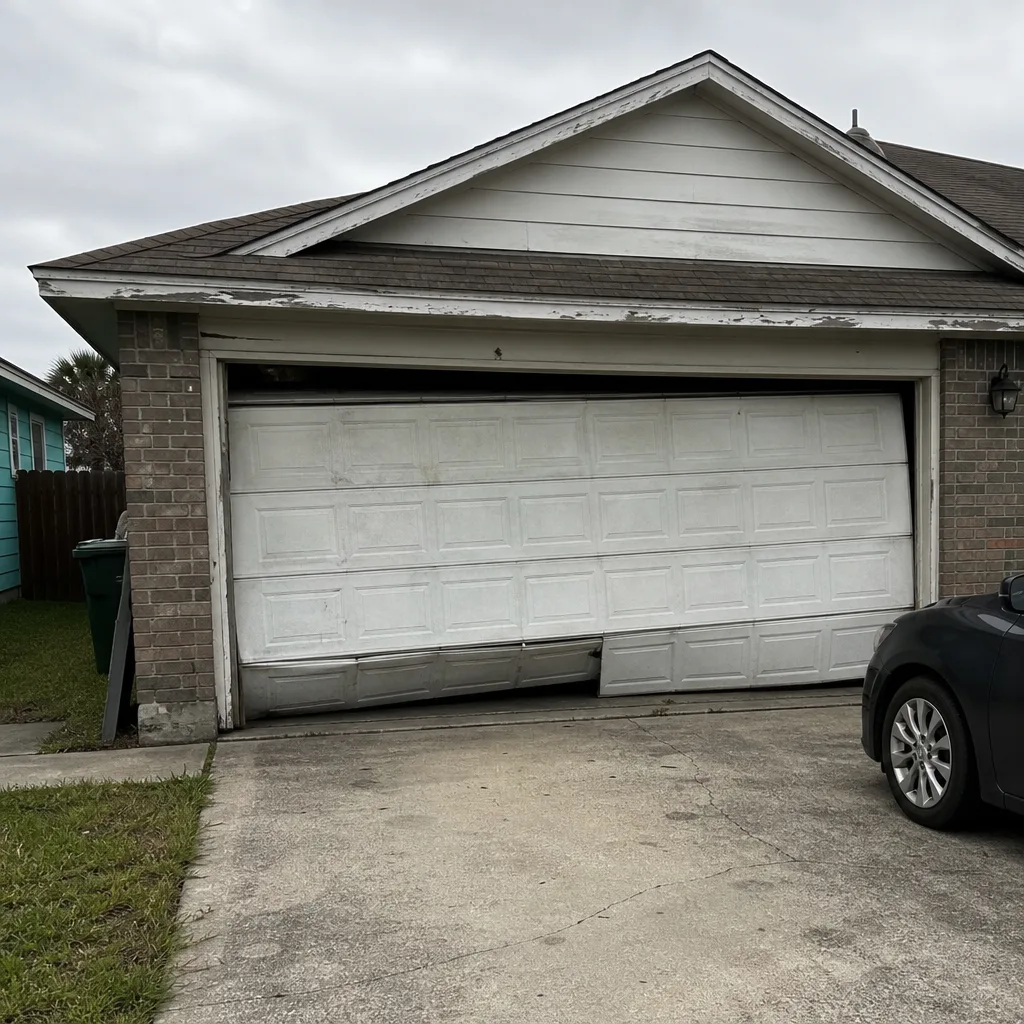 Before
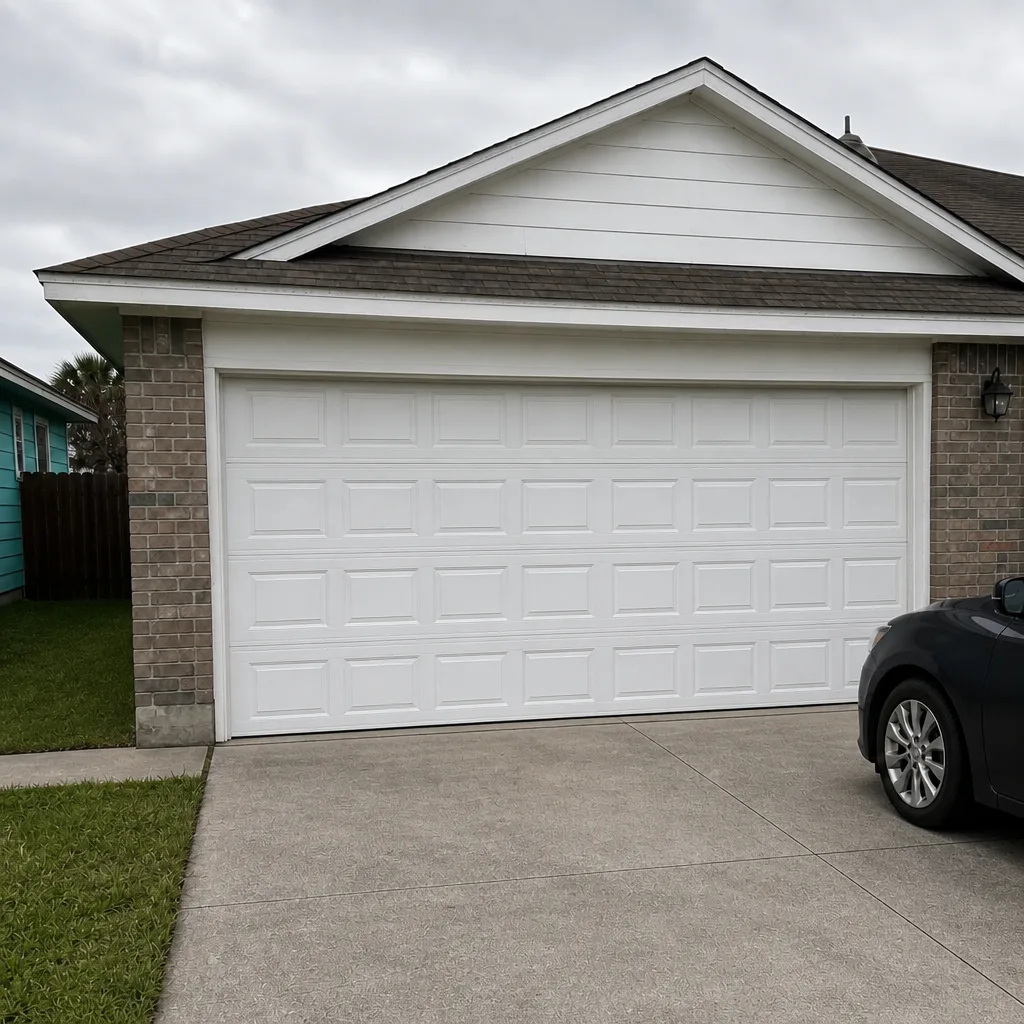 After
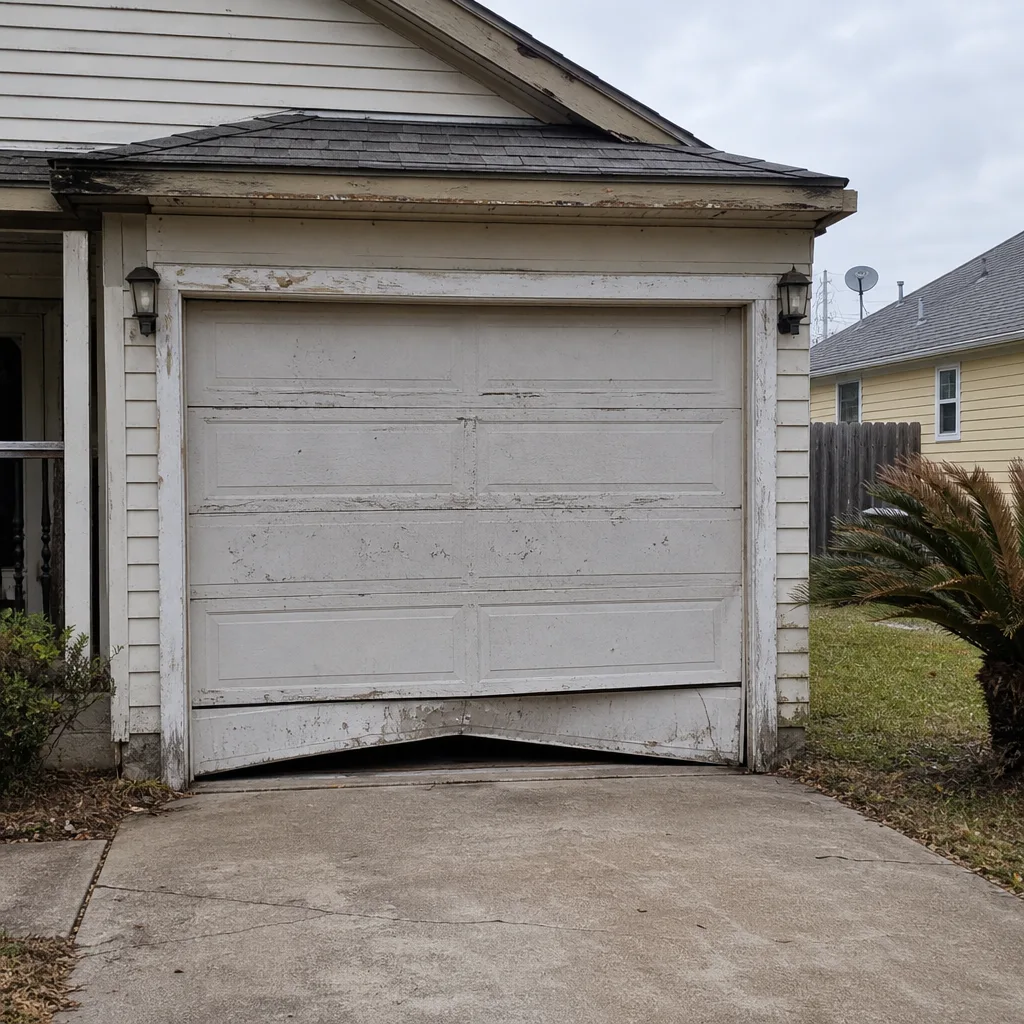 Before
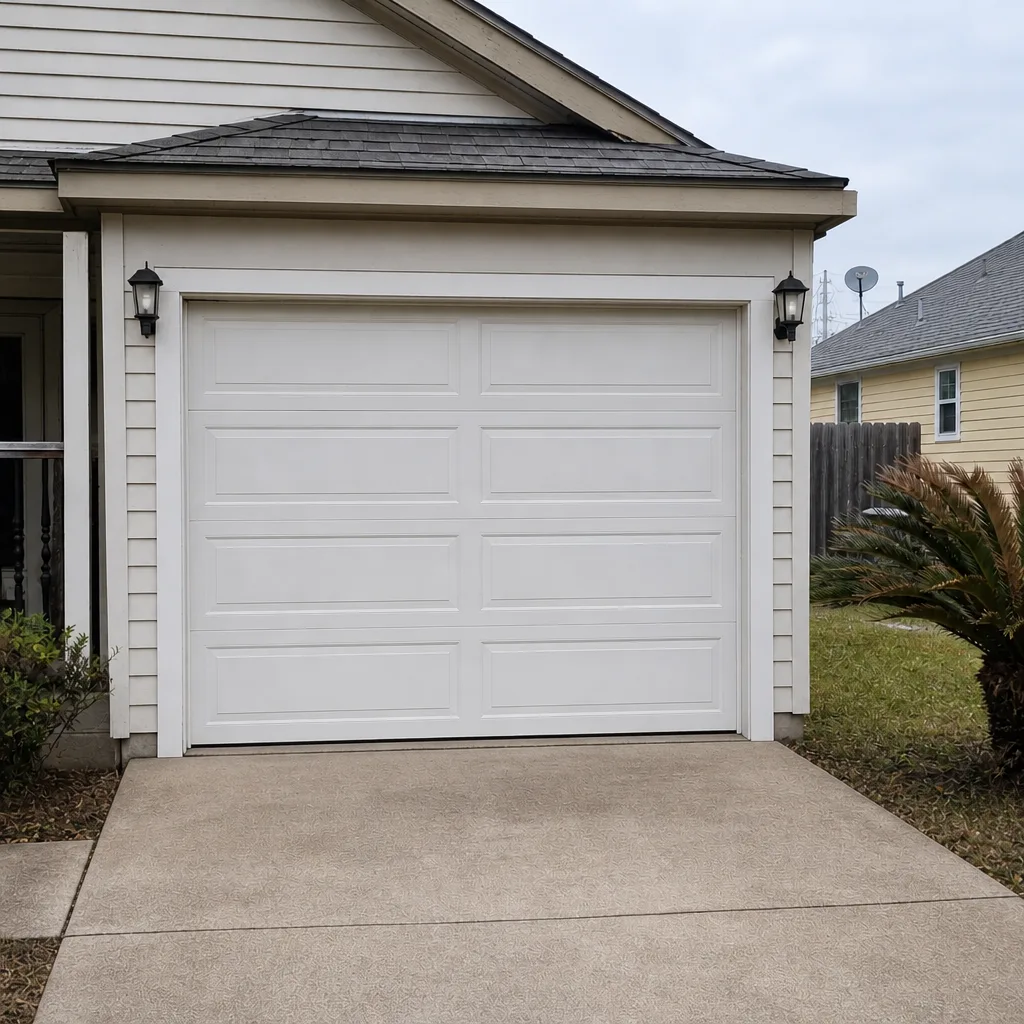 After
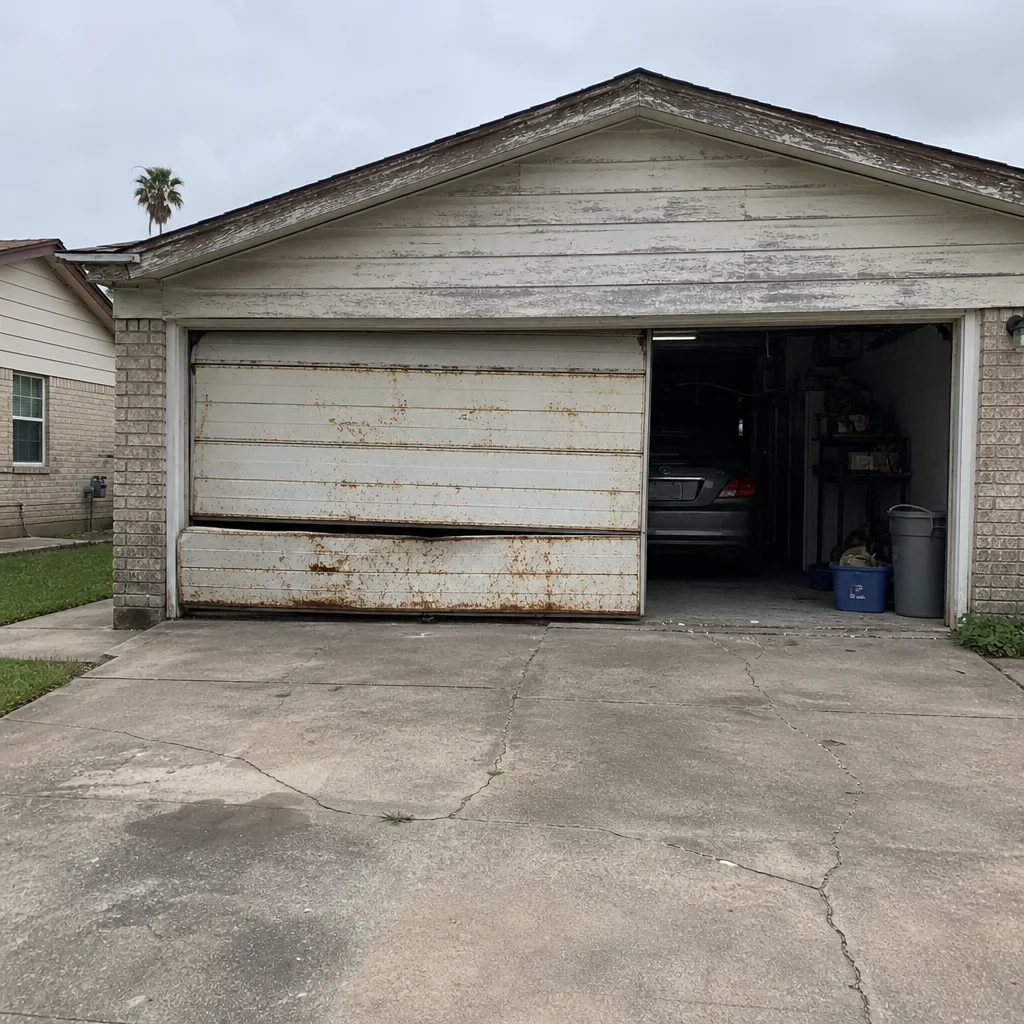 Before
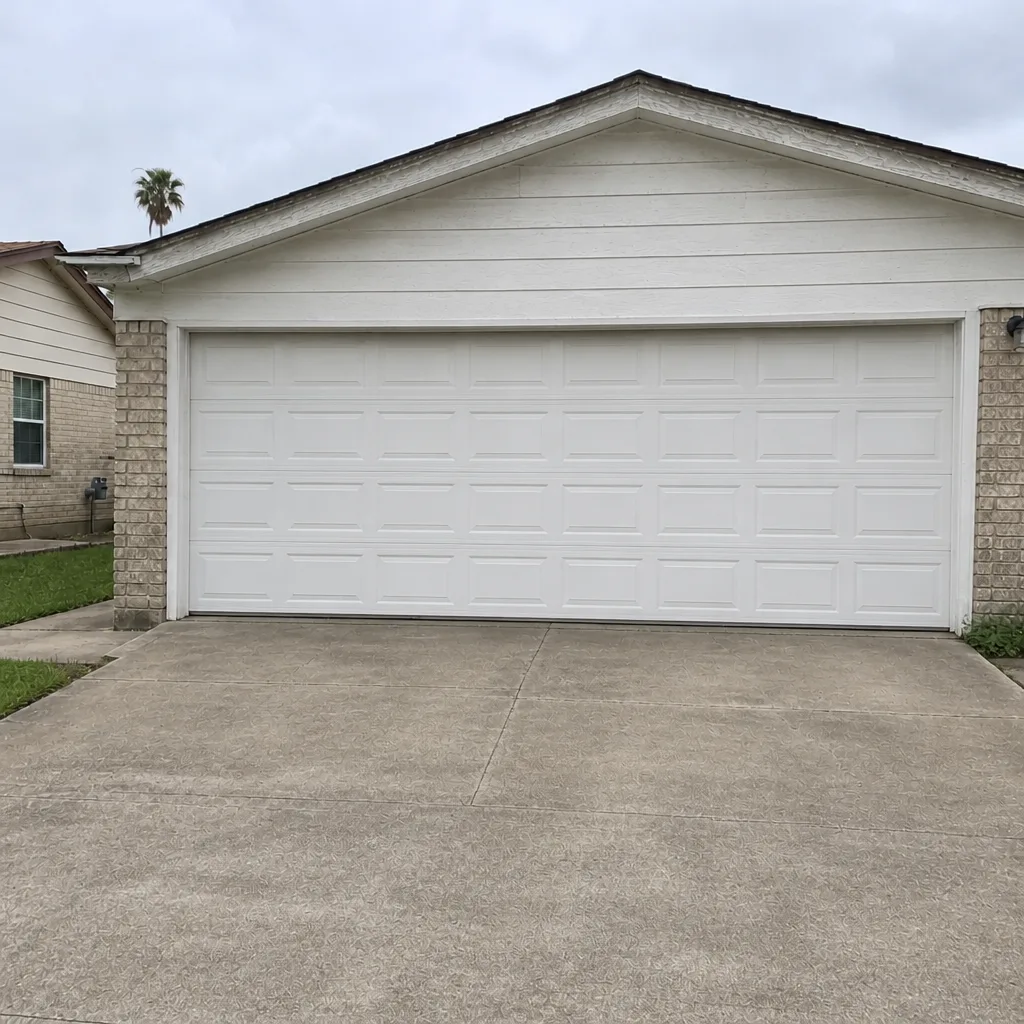 After
When to Call a Professional
Call a professional for any job involving torsion springs, cables, track realignment after structural damage, opener replacement or rewiring, and any installation or replacement of the garage door opening itself in Galveston. Also call when a door has become unbalanced, when it reverses for no visible reason, or when a repair attempt has made the problem worse. The rule of thumb is simple: if the task involves stored energy, electrical work or the building envelope, a licensed professional should be doing it. Galveston Garage Door Repair Pros offers free estimates in Galveston, and our technicians are factory-familiar with the most common brands on the market. Call (866) 412-5303 to talk through your situation before you start a job that might deserve a professional.
Frequently Asked Questions
No. Torsion spring replacement is the one garage door task that should never be DIY. The springs store enough energy to cause serious injury in a fraction of a second if something slips, and the physics doesn’t care how carefully you followed a tutorial. Call (866) 412-5303 for a spring repair quote; estimates are free.
It depends on your windstorm coverage, and that’s a question for your insurer. Many windstorm policies in Galveston require documented windstorm-resistant construction for changes to the building envelope, and a garage door opening counts. Ask your insurer before the work starts, and use a licensed installer who can produce the paperwork. Call (866) 412-5303 to discuss the sequencing with our team.
Only for tasks that don’t involve wiring or replacement. Reprogramming a remote, changing a keypad code or resetting the opener after a power outage is safe DIY work. Replacing or rewiring an opener involves electrical work and should go to a licensed professional. Call (866) 412-5303 if you’re not sure which side of that line you’re on.
It can, if the installation changes the building envelope without the required documentation. Coverage terms vary by insurer, so confirm the specifics with yours. What we can say from experience is that the savings on a DIY install are rarely large enough to justify the risk of a coverage question during a claim. Call (866) 412-5303 for a free estimate on a compliant install.
A single torsion spring replacement typically runs $180-$340. A matched pair is usually replaced together, so a pair costs about twice the single-spring range. The written estimate we give you is the price, agreed before any work starts. Call (866) 412-5303 for an exact quote on your door.
We service LiftMaster, Chamberlain, Genie, Clopay, Amarr, Wayne Dalton, Craftsman and Raynor. That covers the vast majority of doors and openers on Galveston homes, from legacy Craftsman systems to newer myQ and Aladdin Connect openers. Call (866) 412-5303 if you’re unsure whether we can work on yours; most of the time we can.
The Bottom Line
The DIY vs professional question isn’t really about skill. It’s about consequences. Lubrication, sensor alignment, remote programming, weather stripping and non-structural cosmetic work are safe, affordable DIY jobs. Springs, cables, opener replacement, structural track work and any installation of the opening itself belong with a licensed professional, and in Galveston’s wind zone the install side comes with insurance documentation that raises the stakes well beyond the door. Our technicians have up to 11 years of experience, and we’re happy to tell you honestly when a job is DIY and when it isn’t. When it isn’t, one call covers it: (866) 412-5303.
Written by the team at Galveston Garage Door Repair Pros.