Last updated November 21, 2026
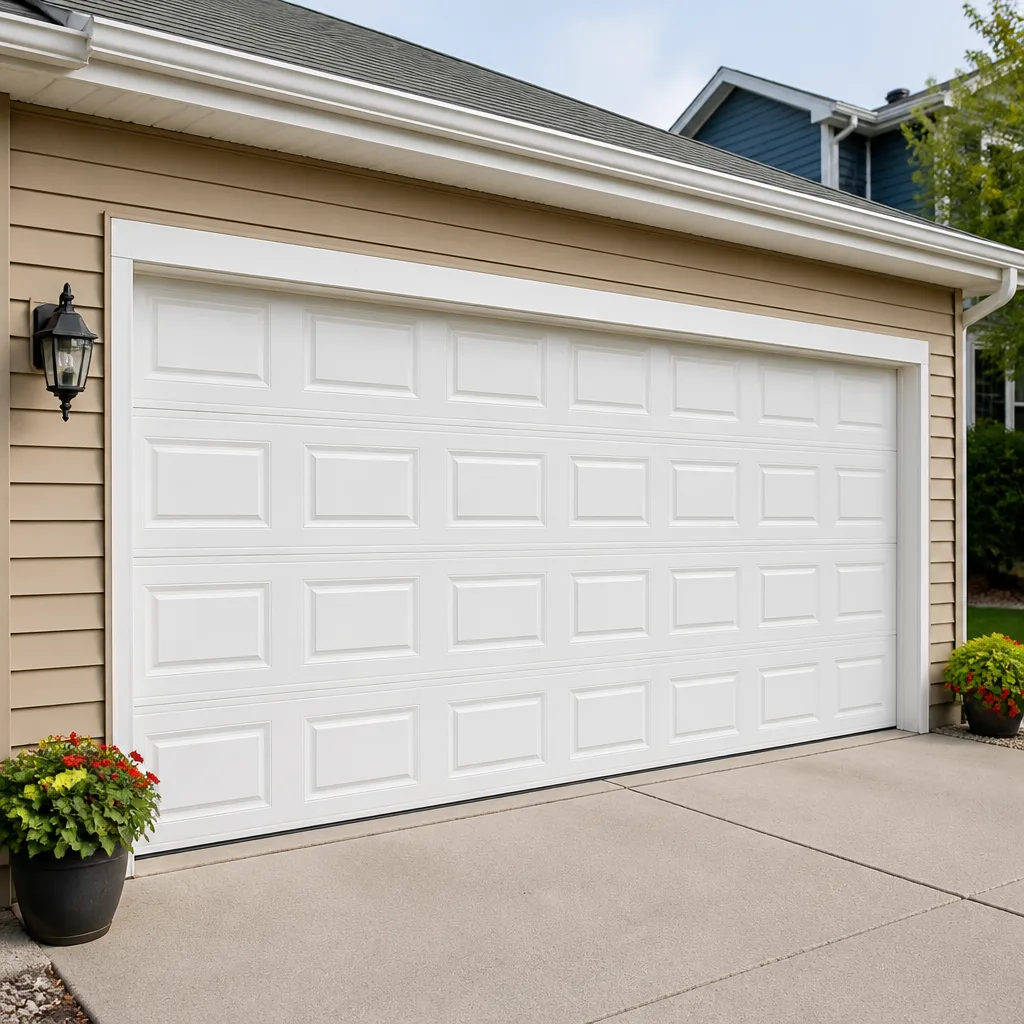 Raised-panel steel
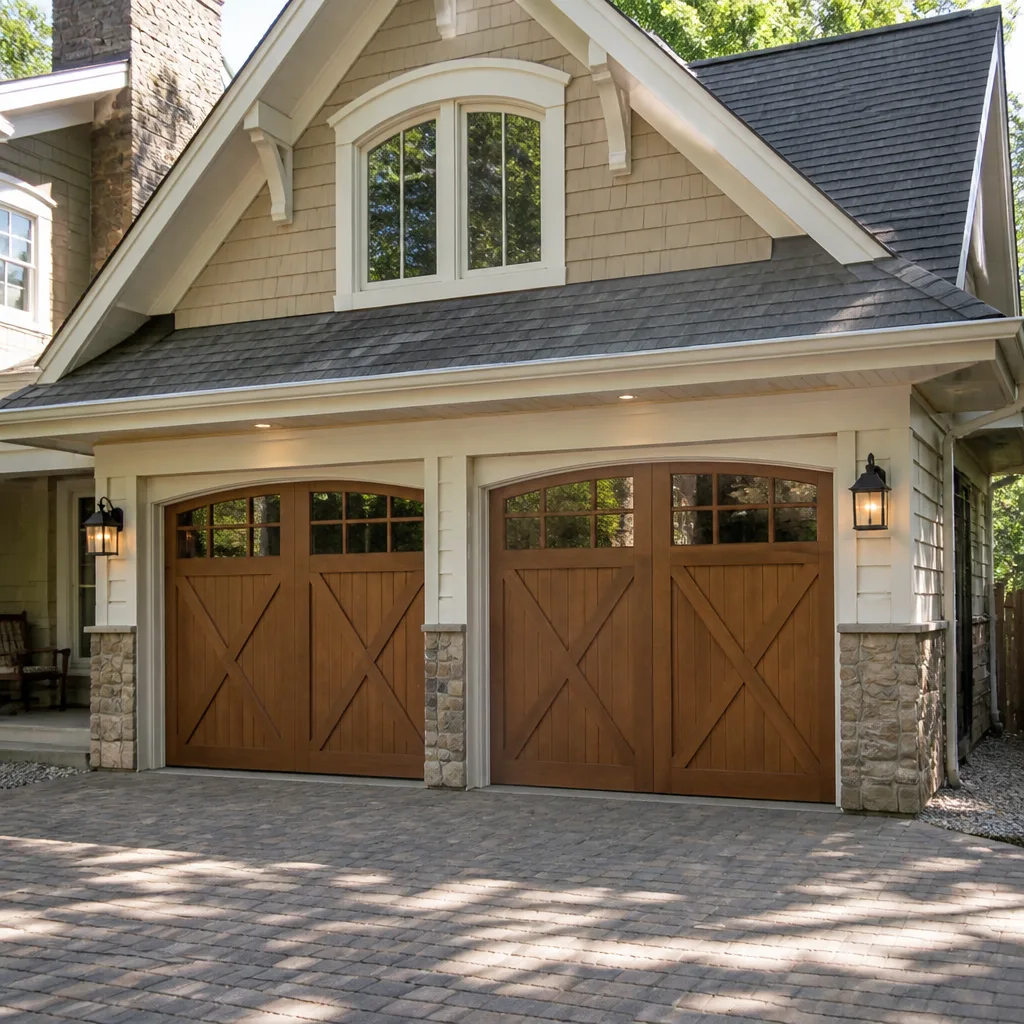 Carriage house
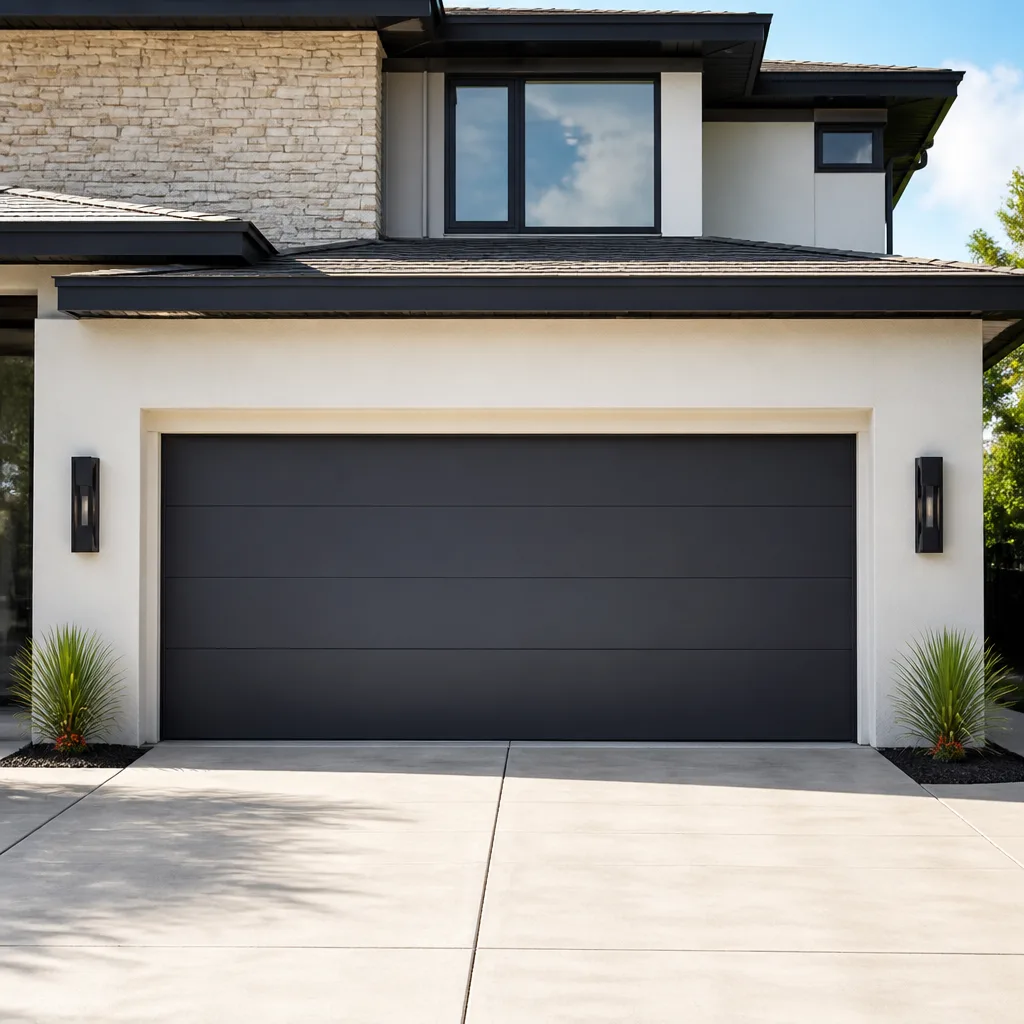 Modern flush
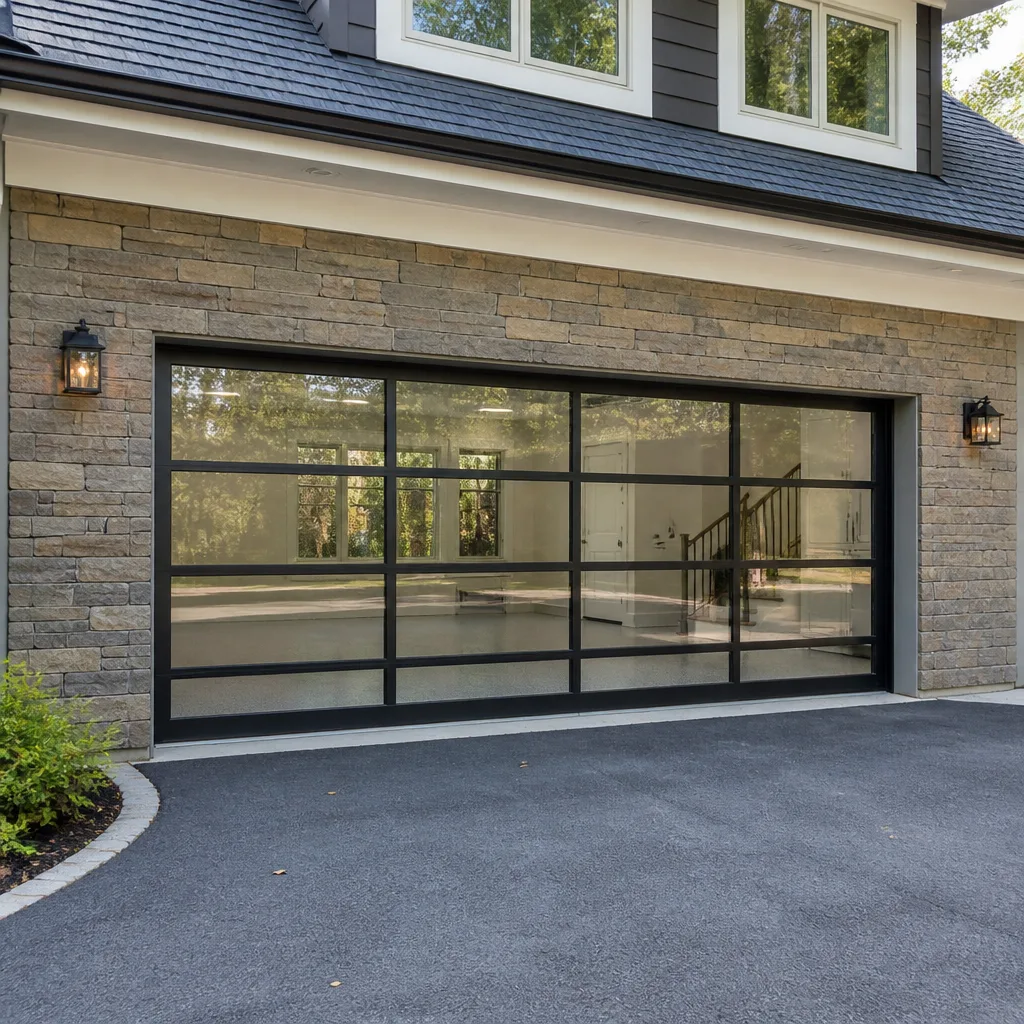 Full-view glass
 LiftMaster openers
 Chamberlain openers
Full 25-point door and opener safety check with every visit - springs, cables, rollers, tracks, and your LiftMaster or Chamberlain opener included
You get a price before we start. It does not change when the pro arrives.
Get your free estimateGarage Door Emergency Preparedness Guide for Galveston Homes
Most garage door advice you’ll find online is written for a storm that lasts an afternoon. Galveston storms don’t work that way. A tropical system can sit on the island for a day, knock out power for a week, and leave your garage door as the only thing between your vehicles and a flooded street. The part nobody plans for is the manual release: the one handle you pull when the opener dies. When that release has sat unused through a few humid Galveston summers, it can seize without warning, and the pull that should drop the door free does nothing at all. This guide walks through how to test that release, choose backup power that actually holds up, brace a door before the season, and restore things safely after the storm passes. It’s written for homes in Galveston, and it’s meant to be read before you need it.
Quick Answer
Storm readiness for a Galveston garage door comes down to four habits: test the manual release and exercise it so it never seizes, keep a battery backup opener charged and know its real limits, brace or confirm the wind rating of the door before the season, and follow a fixed post-storm sequence that starts with inspecting the door by hand before you ever apply power. The single failure that catches island homeowners most often is a release that won’t pull free when the power is already out. Test it now, while the grid is up and the weather is calm.
Styles & brands we work with
- Raised-panel steel
- Carriage house
- Modern flush
- Full-view glass
- LiftMaster openers
- Chamberlain openers
Table of Contents
- How to Test and Exercise Your Manual Release Before Storm Season
- Why the Manual Release Seizes on Galveston Doors
- Battery Backup Openers: What the Specs Don’t Tell You
- Pre-Storm Reinforcement: Wind-Rated Doors and Brace Kits
- What to Do If the Door Is Damaged Mid-Storm
- Post-Storm Sequence: The Right Order of Operations
- Common Mistakes to Avoid
- Frequently Asked Questions
How to Test and Exercise Your Manual Release Before Storm Season
The manual release is a small cord, handle, or lever that disconnects the opener’s trolley from the door so you can lift it by hand. It exists so you can get out when the power is gone. The problem is that it’s the least-used part of the whole system, and on a Galveston door it can sit untouched for years. Every pre-season check should start here, while the power is on and someone is home.
Do it as a planned exercise, not a surprise during a blackout. Here’s the sequence we walk homeowners through:
- Close the door fully and disconnect the opener from the door using the release cord or lever.
- With the opener disconnected, lift the door by hand about halfway. If it won’t lift smoothly or feels unusually heavy, the springs are tired and need attention before the season, not during it.
- Lower the door gently and reconnect the trolley so the opener engages again.
- Run the opener once or twice to confirm it reconnected properly and the door travels normally.
- Repeat this exercise a couple of times a year, especially before the June-through-November storm window, so the mechanism stays free.
If the cord pulls and nothing happens – the door stays bound to the opener – stop and treat it as a real fault. Don’t yank harder. A stiff or frozen release is exactly the failure mode that leaves people trapped in their garages when they need to leave. If you’re not sure whether the release is working correctly, this is a good moment to schedule garage door repair so a technician can free it and check the whole travel system while the weather’s still clear.
Why the Manual Release Seizes on Galveston Doors
Galveston air is humid year-round and the temperatures swing between mild winter nights and hot, sticky summer afternoons. That combination is hard on bare metal, and the release mechanism is one place it shows up fast. The trolley arm, the release lever pivot, and the connecting link all sit in an unheated garage where moisture lingers. Over a few seasons, surface rust and stiffened grease can lock the release in the “engaged” position, so the cord goes slack and the door never detaches.
What makes this dangerous is the timing. The release is designed to be used when the power is already out, which is precisely when you don’t want to be diagnosing a stuck mechanism by flashlight. In our experience, the homeowners who get caught are the ones who never tried the release until the night they needed it. The fix is simple and it’s entirely a matter of doing it early:
- Pull and reset the release at least twice a year, and always ahead of storm season.
- Look for rust, grit, or hardened grease at the trolley and the release pivot.
- Make sure the cord hangs within easy reach and isn’t tangled in the door hardware.
- If the handle feels stiff or the door won’t detach, have it serviced rather than forcing it.
Any brand behaves the same way here – a Chamberlain opener, a Genie unit, or an older Craftsman system all use a similar trolley release that responds to the same neglect. On Galveston doors the humidity does the work of seizing it for you. If a pull does nothing, the release needs to be freed and the door checked by someone who knows the mechanism, and that’s the kind of call garage door opener repair is meant for.
Battery Backup Openers: What the Specs Don’t Tell You
Battery backup openers are the right idea for a place that loses power in every storm, but the advertised numbers tell only part of the story. A backup battery is rated for a certain number of open-and-close cycles on a fresh charge, and those cycles are typically counted when the door is balanced and the battery is new. Neither condition holds forever. A door with worn springs, or a battery that’s been sitting on a shelf in a hot garage, will deliver far fewer cycles than the box promises.
What matters for a multi-day outage is not the headline cycle count but how you’ll actually use the door. The practical rules are the same across brands:
- Keep the battery charged and check its health before the season, not after the lights go out.
- Conserve cycles during an outage: get vehicles in or out in one trip rather than opening and closing repeatedly.
- Only operate the opener under battery power when the door is balanced; a heavy door drains the battery fast and strains the motor.
- Know that a backup battery is for short, essential use; for a multi-day outage, the manual release is the real plan.
If you’re choosing a system, look at the opener you already own before buying new. Smart-home and connected models – LiftMaster with myQ, Genie Aladdin Connect, newer Chamberlain units – all handle backup power in their own way, and a technician who works on the brand can tell you what your specific unit will realistically do on battery. If your opener is older and has no backup at all, this is the season to plan an upgrade rather than wait for the next outage to test it.
Pre-Storm Reinforcement: Wind-Rated Doors and Brace Kits
A wind-load rated door and an additionally braced door are two different things, and the distinction matters before storm season. A door built and rated to a wind-load standard is engineered to resist a set pressure without added hardware. An older or lighter door that wasn’t rated that way can often be strengthened with a horizontal reinforcement brace kit, which adds stiffness across the door panels so it doesn’t bow or buckle under a gust.
Whether a brace kit is worth installing comes down to your door and your exposure:
- If your door already carries a wind-load rating, adding a brace is usually unnecessary – confirm the rating rather than assuming.
- If it’s an older, lighter, or unrated door, a horizontal brace kit is a low-cost way to add rigidity and reduce the chance of buckling.
- Lighter panel doors, including many steel and aluminum models from makers like Clopay and Amarr, benefit most from bracing.
- Any bracing should be installed to the door and opener manufacturer’s guidance; an improperly mounted brace can do more harm than good.
This is also the moment to look at the door’s overall health. Worn springs, sagging panels, and loose hinges all make a door more likely to fail under stress. If you’re not sure what your door can handle, a free measure and inspection tells you whether it needs a brace, a service, or eventually a replacement. For doors that are past saving, the right answer may be a new wind-rated unit, and that’s what garage door installation covers.
What to Do If the Door Is Damaged Mid-Storm
If a panel buckles, a track bends, or the door stops halfway and won’t close while the storm is still going, the goal shifts from full repair to damage control. A door that won’t close leaves your garage open to wind-driven rain and whatever the street is carrying. The job is to buy time safely until a technician can reach you. The steps below are the measures that help most:
- Don’t force a door with a bent track. Pushing harder can drop a panel or damage the motor further, so leave it where it sits unless you can safely guide it down by hand.
- If the door is open and won’t close, shut off power at the opener so it doesn’t try to run against a jammed door.
- Create a temporary barrier: use sandbags, a rolled tarp, or heavy plastic along the bottom of the opening to slow water entry, and weight it down.
- Secure the opening as best you can with whatever is safely available, and keep people and vehicles clear of a door that’s hanging or swaying.
- Once the weather allows, call for a repair visit and describe exactly what happened so the technician arrives with the right parts.
A damaged door is also a security gap once the storm passes and the neighborhood empties out. Don’t leave a garage open any longer than you have to. As soon as it’s safe, get garage door repair on the schedule so the opening is closed and locked again.
Post-Storm Sequence: The Right Order of Operations
The most common mistake after a hurricane is restoring power and hitting the opener button to see if the door works. That’s the wrong first step. If the door is off its track, has a broken spring, or is jammed, powering the opener can bend the track, strip the trolley, or burn out the motor before you’ve assessed anything. In our experience, the damage a hasty button-press causes is often worse than the storm itself. Follow a fixed order instead:
- Inspect by hand, with power off. Look at the tracks, panels, hinges, and springs. Check whether the door sits level and whether anything is visibly bent or hanging.
- Check the springs and cables. A snapped spring or a slack cable is a stop sign – don’t operate the door and don’t touch the spring or cable yourself. These parts are under extreme tension and can cause serious injury. This is garage door spring repair territory, and it belongs to a trained technician.
- Test the manual release by hand. Confirm the door detaches and moves freely before you reconnect anything.
- Clear debris and water. Remove anything that could jam the tracks, and dry out the opener area.
- Only then restore power and run the opener once. Watch and listen through a full open-and-close cycle, and stop immediately if anything sounds off.
If anything in that sequence is uncertain, stop and call. A quick professional check after a storm is far cheaper than the repair that follows a bent track or a burned-out opener, and it’s the safe way to get the door working again on a Galveston home.
Common Mistakes to Avoid
- Never testing the manual release until the power is out. The release is the one part that fails silently, and the only time you find out is when you need it. Exercise it before the season, every season.
- Trusting a backup battery without checking its health. A backup rated for a week of cycles won’t last that long on an old, hot-shelf battery. Test the charge now, not during an outage.
- Powering up the opener before inspecting the door. Hitting the button on a storm-damaged door can turn a small problem into a bent track or a dead motor. Inspect by hand first.
- Touching a broken spring or cable. Springs and cables are under heavy tension and can cause serious injury. Leave them to a trained technician, no exceptions.
- Assuming a door is wind-rated when it isn’t. Many older Galveston doors were never rated that way. Confirm it, and brace or replace if needed.
- Leaving a storm-damaged door open for days. An open garage is a security gap once the neighborhood clears out. Get it closed and repaired promptly.
- Forcing a jammed door. Pushing harder on a door with a bent track or a seized release can drop a panel. Call for help rather than muscling it.
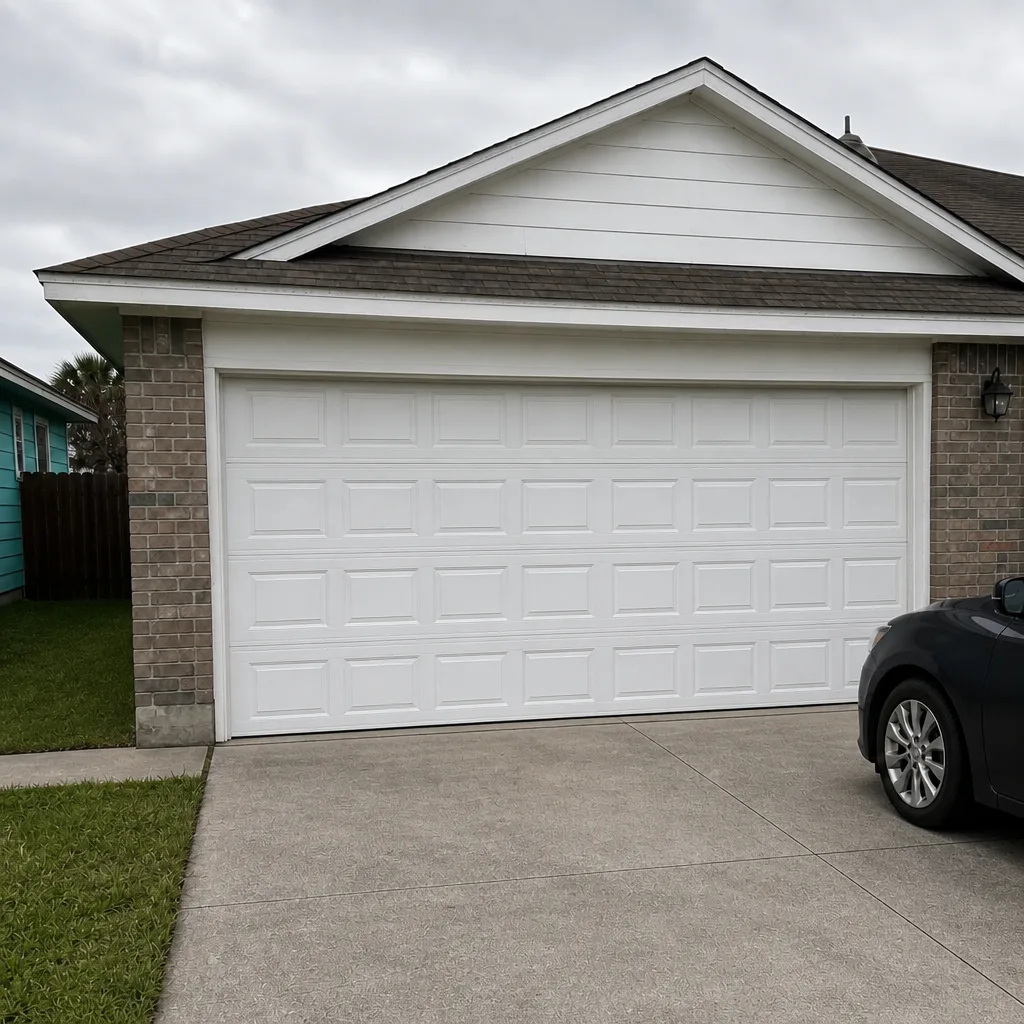
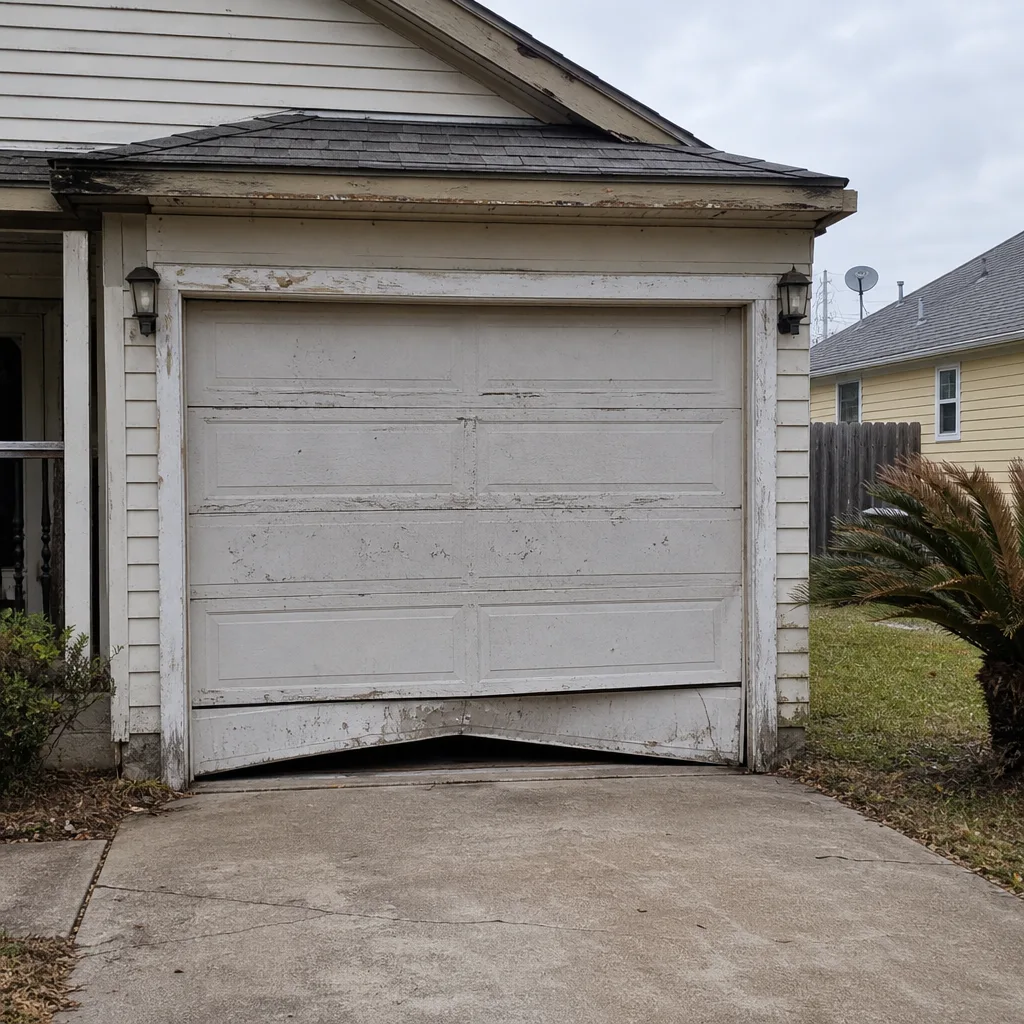
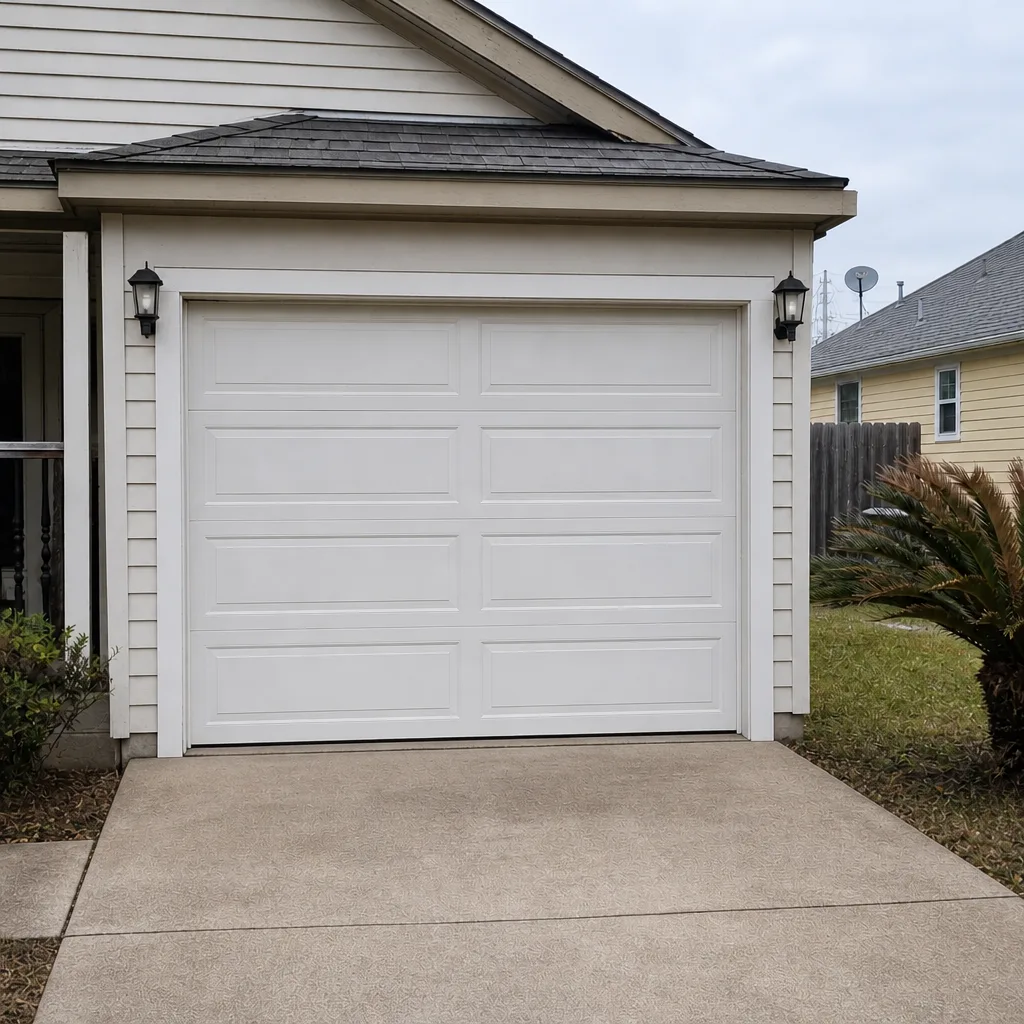
See the difference
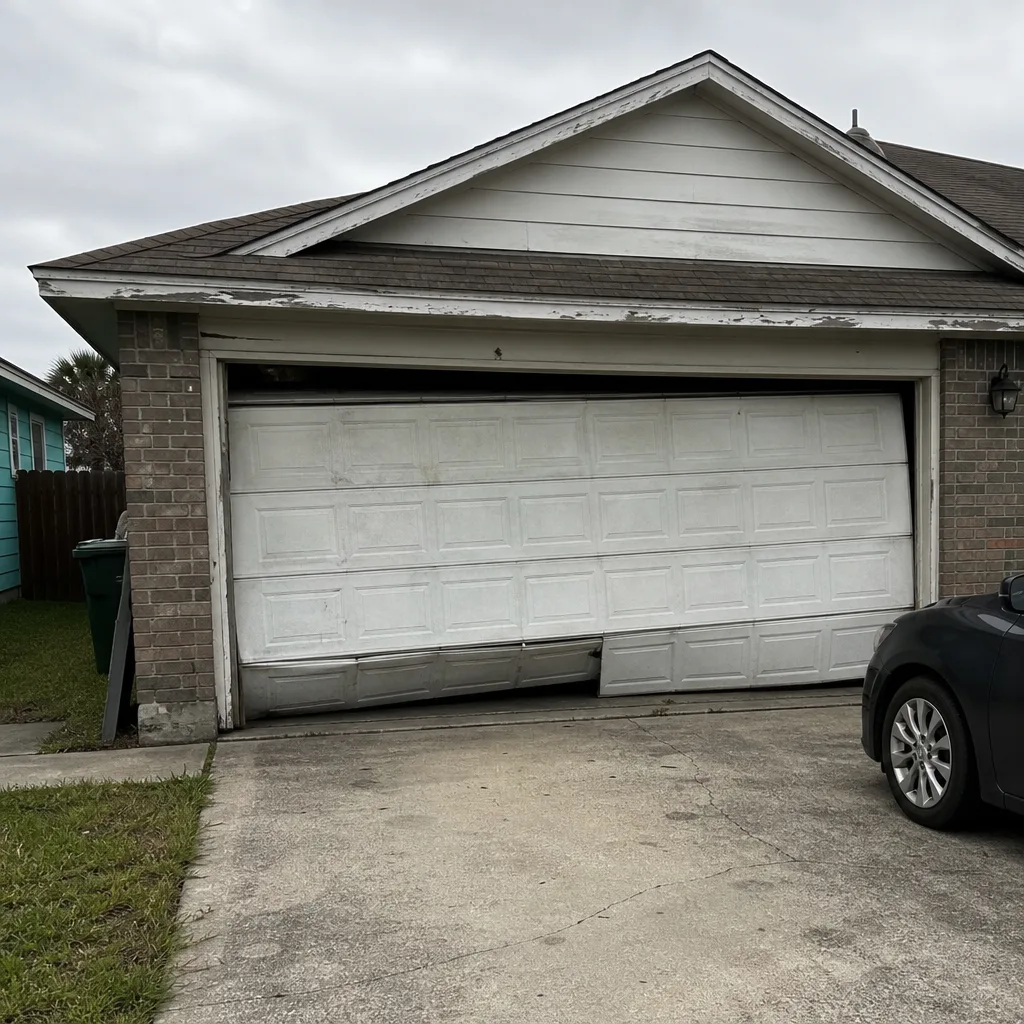 Before
 After
 Before
 After
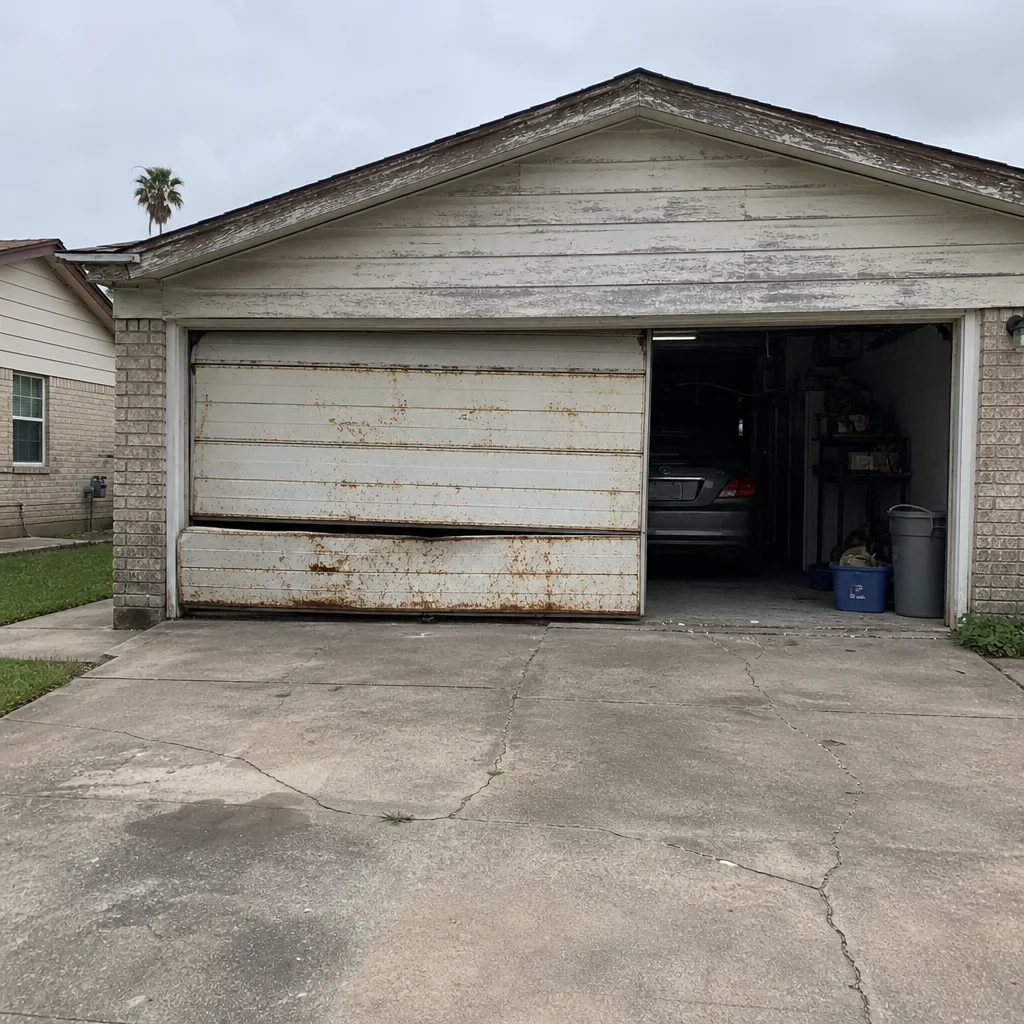 Before
 After
When to Call a Professional
Some things are worth handling yourself: testing the release, clearing debris, checking the battery. Others aren’t. Call a professional when a spring or cable is broken or slack, when the door is off its track or hanging, when the manual release won’t free the door, when the opener runs but the door doesn’t move, or when you’re not sure whether your door is wind-rated. Those are the situations where a wrong move can hurt someone or make the repair bigger. Galveston Garage Door Repair Pros offers free estimates in Galveston – call (866) 412-5303. Technicians work on the brands you already own, from Chamberlain and Genie openers to Clopay and Amarr doors, so most jobs get diagnosed and completed without a second call.
Frequently Asked Questions
Close the door, pull the release cord or lever to disconnect the opener, then lift the door by hand a few feet and lower it gently. If it detaches easily and lifts smoothly, the release and springs are working; if the cord goes slack and the door stays bound to the opener, the release is stuck and needs service. Do this before storm season while the power is on.
It works for essential, limited use, not for normal daily operation over several days. A backup battery is rated for a set number of cycles when the battery is fresh and the door is balanced, so plan to use it sparingly and rely on the manual release for repeated openings. Check the battery’s health before the season.
The release mechanism is likely seized, often from humidity and stiffened grease, and the cord is going slack without freeing the trolley. Don’t force it – a stuck release is a real fault. Have a technician free the mechanism and check the door; call (866) 412-5303 for a free estimate.
It depends on your door. If it already carries a wind-load rating, a brace is usually unnecessary; if it’s older, lighter, or unrated, a horizontal brace kit can add rigidity and reduce the chance of buckling. Confirm the rating rather than assume it, and have any bracing installed to the manufacturer’s guidance.
Don’t force a jammed door. Shut off power at the opener so it doesn’t run against the jam, then create a temporary water and security barrier with sandbags, a tarp, or heavy plastic along the opening. Get people and vehicles clear of a hanging door, and call for repair once it’s safe.
Yes – emergency garage door service is available for urgent failures like doors stuck open, broken springs, and openers that won’t release. Call (866) 412-5303 and we’ll work out the soonest booking. Estimates are free, and the price is quoted and agreed before any work starts.
The Bottom Line
Garage door storm readiness on a Galveston home is less about the storm and more about the months before it. Test the manual release and exercise it so it never seizes. Check your backup battery’s health and know its real limits. Confirm whether your door is wind-rated, and brace it if it isn’t. After a storm, inspect by hand and clear debris before you ever restore power, and leave broken springs and cables to a trained technician. Do those four things and the worst of a storm won’t catch you by surprise. When you need a hand, we’re one call away.
Whether you’re tightening up before the season or dealing with a door that’s already given up, Galveston Garage Door Repair Pros can help – repair, opener repair, spring repair, and installation, handled by technicians with up to 11 years of experience. Call (866) 412-5303 for a free estimate, and get back on track before the next system rolls in.
Written by the team at Galveston Garage Door Repair Pros.