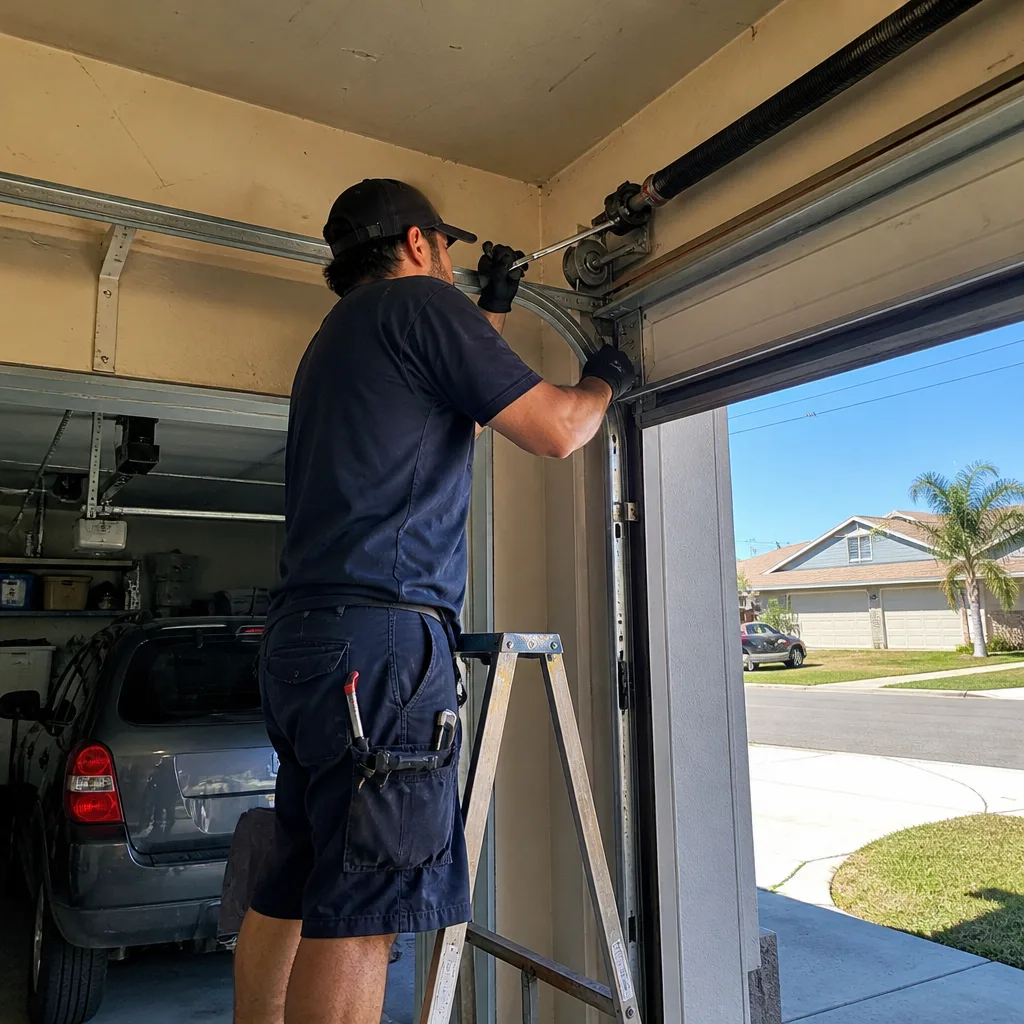
Last updated November 21, 2026
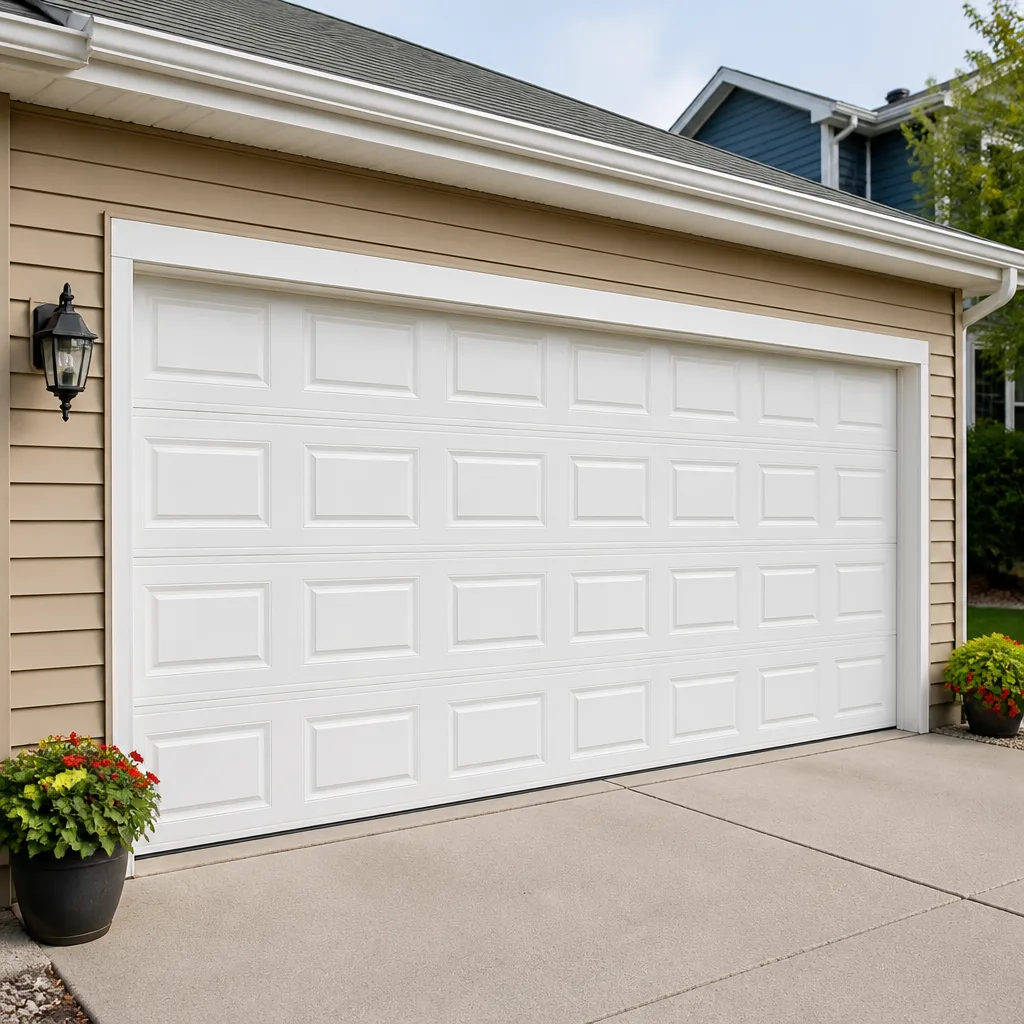 Raised-panel steel
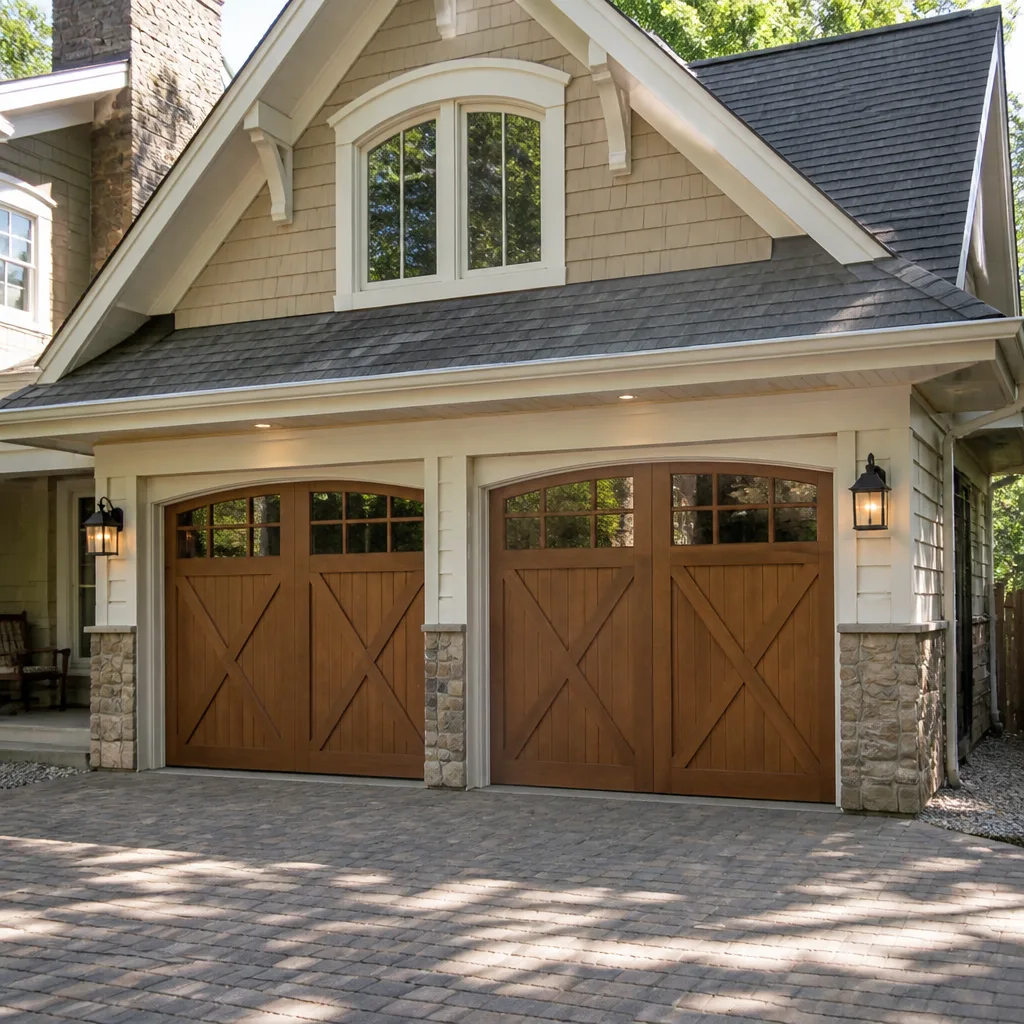 Carriage house
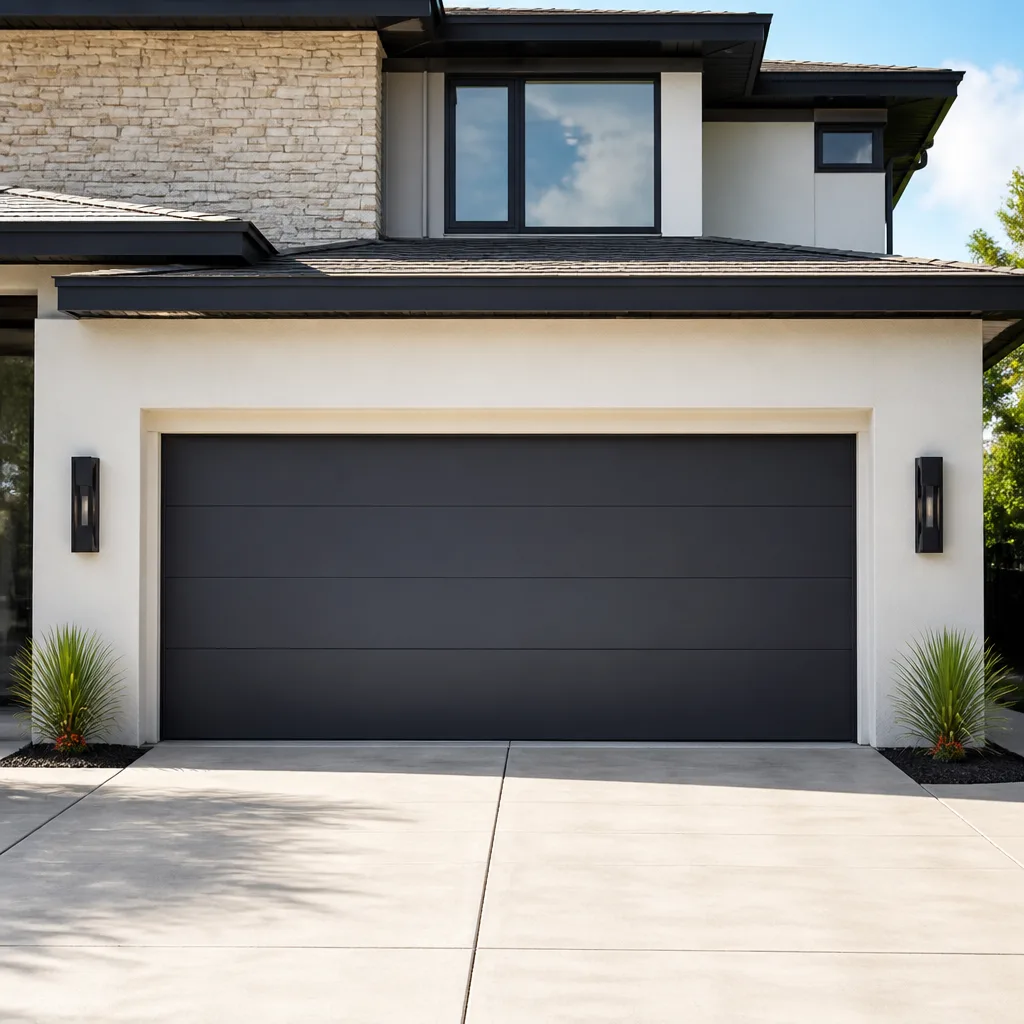 Modern flush
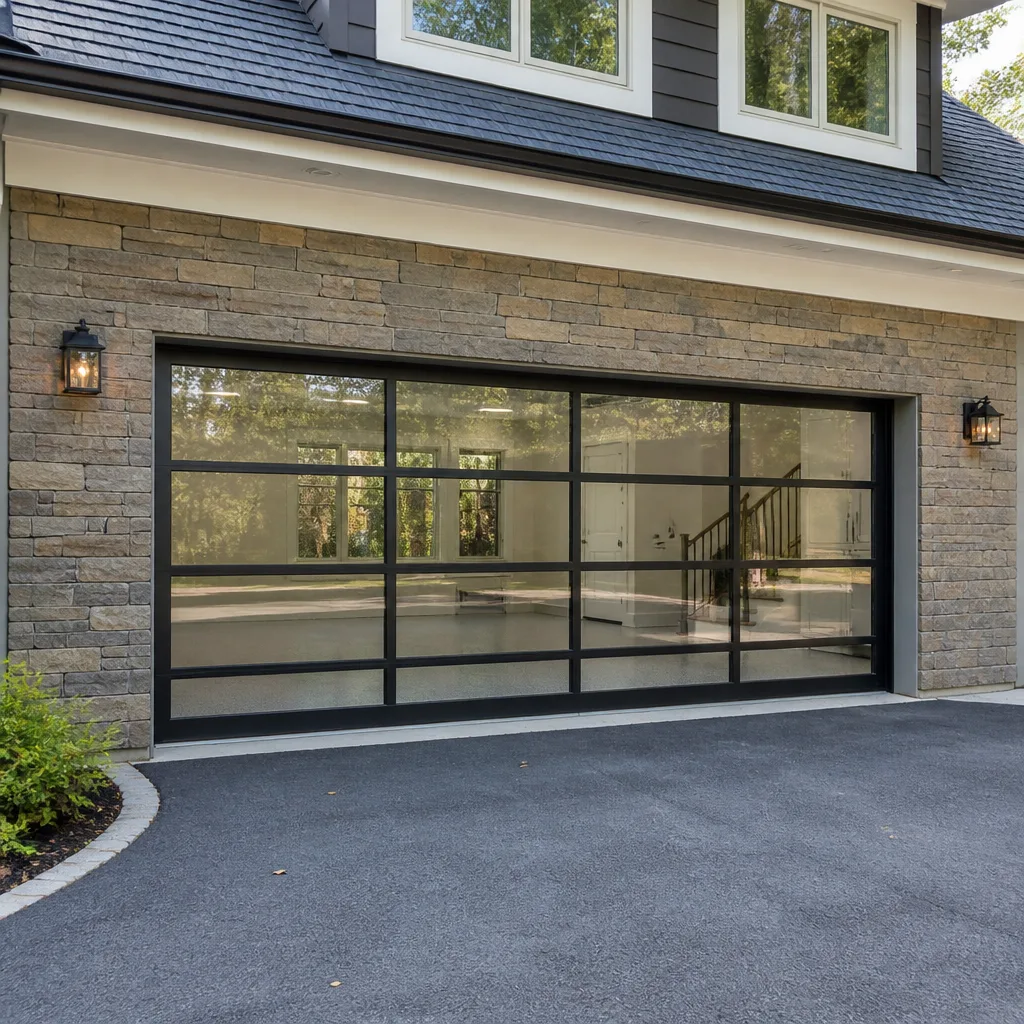 Full-view glass
 LiftMaster openers
 Chamberlain openers
Full 25-point door and opener safety check with every visit - springs, cables, rollers, tracks, and your LiftMaster or Chamberlain opener included
You get a price before we start. It does not change when the pro arrives.
Get your free estimateHow to Hire a Garage Door Contractor in Galveston: A Step-by-Step Guide
Most homeowners in Galveston shop for a garage door contractor the same way they’d shop for a paint job: call three companies, compare prices, hire the cheapest. That approach ignores the one filter that matters here more than anywhere else in Texas. A garage door and the way it’s installed affects whether your property can hold a windstorm insurance certificate through the Texas Department of Insurance. A contractor who can’t or won’t handle that paperwork can leave you with a perfectly good-looking door and a coverage gap you didn’t know existed until you file a claim or list the house.
This guide walks through what to verify before you sign, how to read an insurance certificate, what to ask about hardware sourcing, and how to write a scope of work that keeps windstorm compliance in the contract instead of in the fine print. We’ve helped Galveston homeowners sort this out, and the steps below are the ones that actually protect you.
Quick Answer
To hire a garage door contractor in Galveston, verify three things before you sign: the contractor can issue or coordinate a TDI windstorm inspection certificate (WPI-8 or WPI-8-C) for your installation, their insurance certificate shows “products and completed operations” coverage in addition to general liability, and their written scope of work explicitly commits to windstorm compliance rather than just “installed per manufacturer specs.” Skip any one of these and the cheapest bid can turn into the most expensive job in the long run.
Styles & brands we work with
- Raised-panel steel
- Carriage house
- Modern flush
- Full-view glass
- LiftMaster openers
- Chamberlain openers
Table of Contents
- Why Windstorm Certification Changes the Whole Hiring Process
- What Is a WPI-8 Certificate and How Do You Verify One?
- How to Read a Galveston Contractor’s Insurance Certificate
- Three Hardware Sourcing Questions Worth Asking
- Red Flags Specific to Storm-Season Contractor Influx
- How to Structure a Written Scope of Work
- Step-by-Step Hiring Checklist
- Common Mistakes to Avoid
Why Windstorm Certification Changes the Whole Hiring Process
Galveston County sits inside the TDI windstorm inspection area. For any structure inside that area, windstorm and hail coverage isn’t automatic. An insurer can require a windstorm inspection certificate before it will write or renew coverage on a property, and it can refuse to cover wind damage to a component that doesn’t have one. A garage door is a large, wind-exposed component. Installation or replacement that isn’t properly documented can create a gap between the door you can see and the coverage you actually hold.
This is the filter most homeowners never hear about, because it doesn’t come up in a normal sales conversation. It comes up at resale, at renewal, or after a storm. We’ve seen Galveston buyers walk into closing on a house where a replaced door had no certificate, and the negotiation that follows is not a friendly one.
What that means for how you shop:
- The cheapest quote is not a complete quote unless it accounts for the certificate and any required design pressure rating on the door.
- A contractor who tells you “certification isn’t necessary” is either uninformed about Galveston County or avoiding a step they can’t deliver.
- Your homeowner’s policy and your windstorm policy are two different things. Verify what each requires before work starts, not after.
When you establish this one filter at the top of the process, most of the other decisions fall into line. Any contractor you consider should be able to answer questions about TDI certification without looking anything up.
What Is a WPI-8 Certificate and How Do You Verify One?
A WPI-8 is the Texas Department of Insurance Windstorm Inspection Certificate for completed construction. A WPI-8-C is the certificate issued for construction in progress. For a garage door replacement on an existing home, the contractor typically needs to arrange for the work to be inspected so that the property can obtain a WPI-8 (or the appropriate version for your situation). The certificate is what an insurer or lender will look for when windstorm coverage is at issue.
The critical question is not “do you have a WPI-8?” It’s “can you coordinate the inspection that produces one for my job?” Those are different questions, and contractors answer them differently.
How to verify a contractor can actually deliver the certificate
- Ask directly: “Will there be a windstorm inspection for this job, and who arranges it?” If the answer is vague, ask again in plain terms: “Will I have a WPI-8 for this installation when it’s complete?”
- Ask for a sample of the certificate from a past job they can share, with the personal information redacted. A contractor familiar with the process will understand the request. A contractor who’s never done it won’t.
- Confirm the requirement with your insurer and your lender before you sign, not after. What your specific policy needs can vary, and the contractor’s job is to meet that requirement, not to guess it.
- Confirm the door model and wind rating on your quote line up with what the insurer expects. A qualifying door installed without documentation is still a coverage problem.
We handle spring replacement, repairs, and installations with this requirement in mind for Galveston properties, because it’s a specific feature of doing business here. If you’re comparing quotes and one of them doesn’t mention certification at all, that’s your first signal you’re comparing different scopes, not different prices. For the technical side of the work itself, see our garage door repair page, which covers what typical repairs involve.
How to Read a Galveston Contractor’s Insurance Certificate
Every contractor you consider should provide a current certificate of insurance. Most homeowners glance at it, see the word “liability,” and file it. The detail that matters for a garage door installation is buried in the coverage descriptions, and it’s easy to miss.
What you’re looking for:
- General liability coverage. Covers injury or property damage that occurs during the work itself. Standard and important.
- Products and completed operations coverage. Covers problems that appear after the job is finished: a door that shifts, a component that fails, a completed installation that causes damage later. This is the coverage most relevant to an installation, and it’s the one most often left off a small operator’s policy.
- Workers’ compensation coverage, or an exemption. If a crew member is injured on your property and workers’ comp isn’t in place, the exposure can come back to the homeowner. Ask for the certificate and read it carefully.
How to verify:
- Request the certificate before you sign anything, not after. A contractor with nothing to hide will send it within a day.
- Check that “Products and/or Completed Operations” appears in the coverage descriptions, and confirm the policy is current.
- Call the insurer directly to confirm the policy is active and that the contractor is covered for residential garage door work. Certificates can be old, expired, or inaccurate.
- Note the liability limit. A limit that won’t cover the value of a door installation plus potential property damage isn’t a meaningful protection.
If a contractor can’t produce products and completed operations coverage for a door installation, ask them to explain why. The answer you get tells you what your recourse looks like if something goes wrong six months from now.
Three Hardware Sourcing Questions Worth Asking
Galveston’s climate puts more stress on garage door hardware than a lot of places in Texas. Humidity, heat swings, and the way hardware is specified matter for long-term performance. Some contractors charge a premium for what they call corrosion-resistant or marine-grade components without actually specifying anything different from a standard hardware kit. A few pointed questions sort out who’s spec’ing the part and who’s just marking up the invoice.
Question 1: “What exact hinges, rollers, and fasteners are on the quote?”
A contractor who knows their hardware should be able to name the component type, not just say “heavy-duty.” If the answer is generic, ask them to put the component specification in writing before the quote is signed. That one request filters out a lot of vague bids.
Question 2: “Is this hardware rated for the coastal-Houston environment, and where does that rating come from?”
A standard zinc-plated hinge and a properly specified fastener look identical in a photograph and behave very differently over time. Ask the contractor to name the finish and the specification. If they can’t, assume it’s standard hardware.
Question 3: “If a roller or hinge fails before the warranty period is over, who handles it and how?”
Warranty terms on hardware vary widely by manufacturer and by what’s written into the installation contract. Get the answer in writing. Also confirm which brand is being installed, because the parts sourcing chain is different for a Clopay door than for an Amarr door, and different again for the opener. We work on the brand you already own and on the brand you’re replacing with. If your opener is what’s failing, our garage door opener repair page covers the brands and the typical repair scenarios.
Three questions, five minutes of conversation. The contractor who answers them with specific part names and written warranty terms is a different animal from the one who answers with adjectives.
Red Flags Specific to Storm-Season Contractor Influx
After a significant storm event on the upper Texas coast, a wave of out-of-area contractors moves through the region. Some are legitimate. Many are not. The pattern is predictable: a company with a Houston-area or out-of-state phone number sets up a temporary operation, prices a lot of jobs aggressively, takes a deposit, does the work quickly, and is unreachable when warranty issues surface months later. The homeowner is left to find someone local to deal with the problem.
Red flags worth taking seriously:
- No local phone number or physical address you can verify. A PO box and a cell number are not the same as a business you can find if there’s a problem.
- Pressure to sign the same day. A real contractor is busy. A contractor who needs your deposit today, before you’ve had time to read the contract, is telling you something.
- Cash-only terms or large deposits before any material is ordered. Deposits for a door order are normal. A large cash deposit with no written invoice is not.
- No showable insurance certificate or a certificate that’s expired. Storm-influx operators frequently carry no current coverage or coverage that doesn’t include completed operations.
- No mention of windstorm certification. If a contractor is doing garage door work in Galveston County and doesn’t bring this up, they haven’t done the work here before in any real sense.
- Warranty in writing is vague or nonexistent. Ask what the warranty covers, who honors it, and how you’d file a claim. Get it in the contract.
- They can’t name the specific opener or door brand they’re installing. Vague brand claims are a sign of undifferentiated work. Familiarity with the actual brands (Chamberlain, Genie, Clopay, Amarr, LiftMaster, Wayne Dalton, Craftsman, Raynor) is basic to doing the job right.
The safe filter is simple: call a Galveston-area company that was doing garage door work here before the storm and will be here after it. If you’re not sure, ask for references from Galveston customers whose job was completed more than a year ago. The answers you get will do the rest.
How to Structure a Written Scope of Work
“Door installed per manufacturer specs” is the most common phrase in garage door contracts and it means almost nothing. It doesn’t name the door model, doesn’t commit to a windstorm certificate, doesn’t specify the hardware finish, and doesn’t say who’s responsible if the inspection fails. A scope of work that protects you needs to be more specific than that.
What a strong scope should include:
- Exact door model and wind rating. Manufacturer, model number, and the design pressure rating the door is specified for. Vague specs invite substitution on install day.
- Windstorm compliance clause. Explicit language that the contractor will coordinate the windstorm inspection required for your property and deliver the certificate. No certificate, no final payment, is a reasonable structure.
- Hardware specification. Hinges, rollers, springs, and fasteners named by finish and type. “Heavy-duty” is not a specification.
- Opener details, if applicable. Brand and model of the opener, whether smart-home features are included, and what the removal and disposal of the old unit involves.
- Timeline and sequencing. When the door is ordered, when it arrives, when installation is scheduled, and how long the inspection adds. Door orders can take time, and a realistic timeline is better than an optimistic one.
- Payment schedule tied to milestones. Deposit to order material, progress payment when the door is delivered, final payment after inspection and certificate delivery.
- Warranty terms in writing. What’s covered by the manufacturer, what’s covered by the contractor, and how long each is in effect. Spring warranties and door warranties are often different in length and structure.
- Cleanup and site condition. Who removes the old door and packaging, and how the property is left at completion.
A scope written this way makes you a different kind of customer in the contractor’s mind, and it makes a bad outcome much less likely. For the specific topic of spring work, which is the most hazardous part of any garage door system and not something we recommend attempting yourself, see our garage door spring repair page for the safety explanation and typical cost structure.
Step-by-Step Hiring Checklist
Here’s the sequence we recommend for Galveston homeowners, in order:
- Check the TDI requirement for your property first. Call your insurer before you call any contractor and confirm what inspection or certificate your windstorm coverage requires for a garage door replacement. Write down the answer and keep it in your folder.
- Get at least three written quotes, each with a full scope. Make sure each quote is comparable. If one bidder includes certification and one doesn’t, the two aren’t the same job.
- Request certificates of insurance from every contractor. Confirm active general liability, and confirm products and completed operations coverage is in place for installation work.
- Ask the WPI-8 question directly. “Will there be a windstorm inspection for this job, and who arranges it?” If you don’t get a clear answer, move on.
- Ask the three hardware sourcing questions. Get the door model, hardware finish, and warranty terms written into the contract, not stated verbally.
- Verify the contractor is local and durable. Phone number, references from Galveston customers, and reported brand experience. Familiarity with your door brand and your opener brand matters more than a sales brochure.
- Sign a contract only when the scope, price, and payment schedule are all in writing. No work should begin without a written scope and price that both of you agree on. If a contractor asks for a deposit before any written agreement exists, that’s the end of the conversation.
- Hold the final payment until the certificate is delivered. A certificate isn’t a formality. It’s the thing that closes the loop on your windstorm coverage.
Common Mistakes to Avoid
- Choosing the cheapest bid before checking what’s excluded. A quote that omits certification isn’t cheaper, it’s incomplete. The cost of addressing a missing certificate later can easily exceed the difference between the two bids.
- Assuming the door has to be installed and certified by the same party. You can ask the contractor to coordinate the inspection, but the certificate is a separate process from the installation. Get the responsibility in writing.
- Accepting “per manufacturer specs” as a scope. It’s an empty phrase. Ask for the model, hardware, and compliance language in the contract.
- Not checking the insurance certificate for products and completed operations coverage. General liability alone doesn’t protect you from a problem that appears after the company has left.
- Hiring a storm-influx contractor with no local track record or reachable address. Post-hurricane waves of out-of-area operators follow a predictable pattern. A company that was here before the storm will be here when the warranty question comes up.
- Putting off the WPI-8 conversation until closing or renewal. The time to sort certification is before the work is scheduled, not months later when your lender or insurer asks for the certificate.
- Hiring on price alone for a hazardous job like spring work. Springs are not a DIY repair, and a low spring quote that skips proper tools and matched components can leave you back where you started or injured.
See the difference
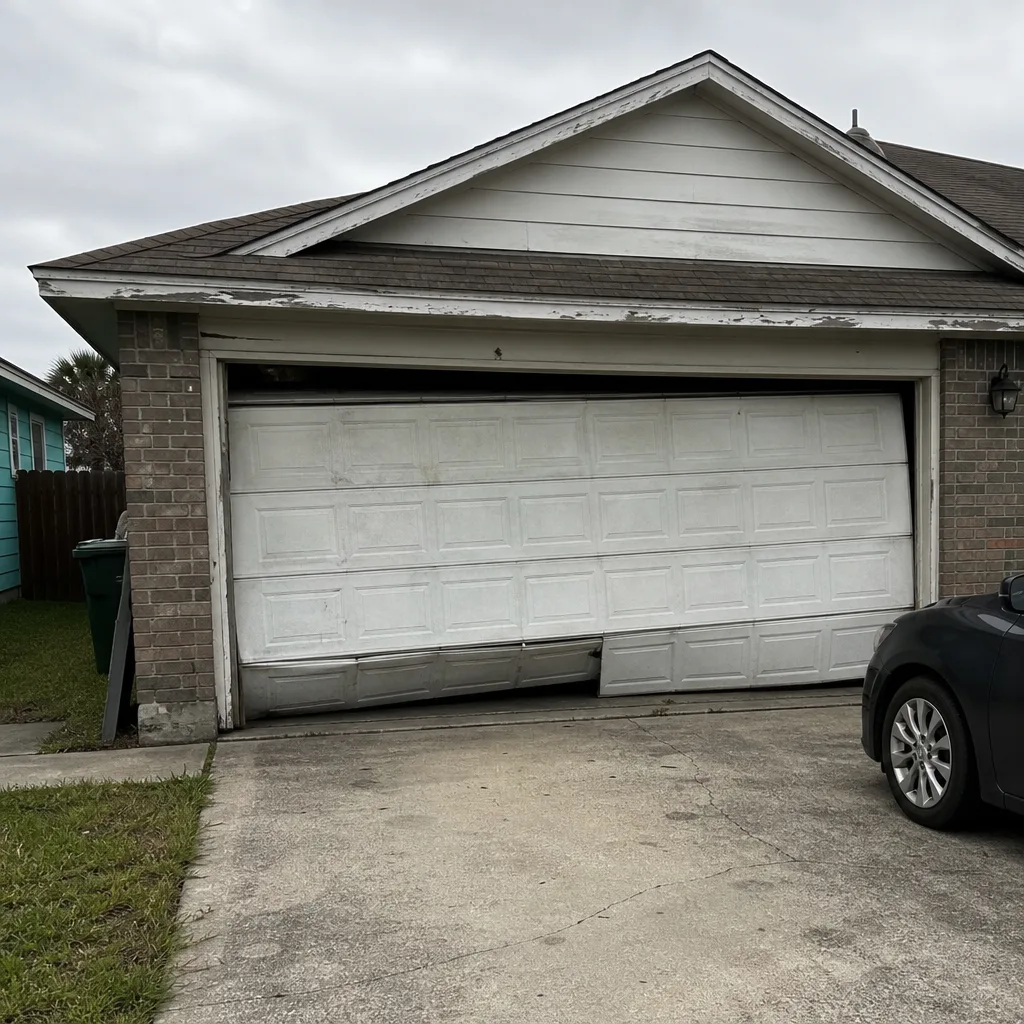 Before
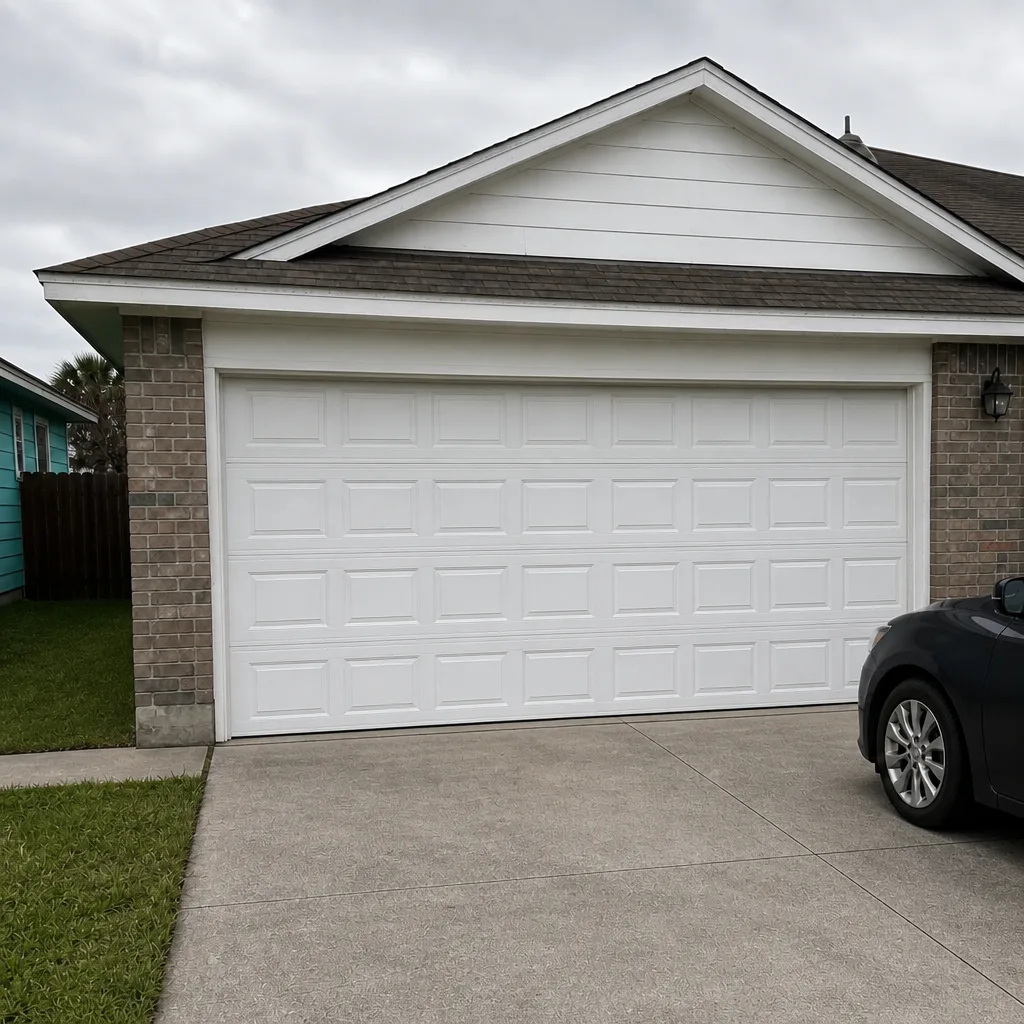 After
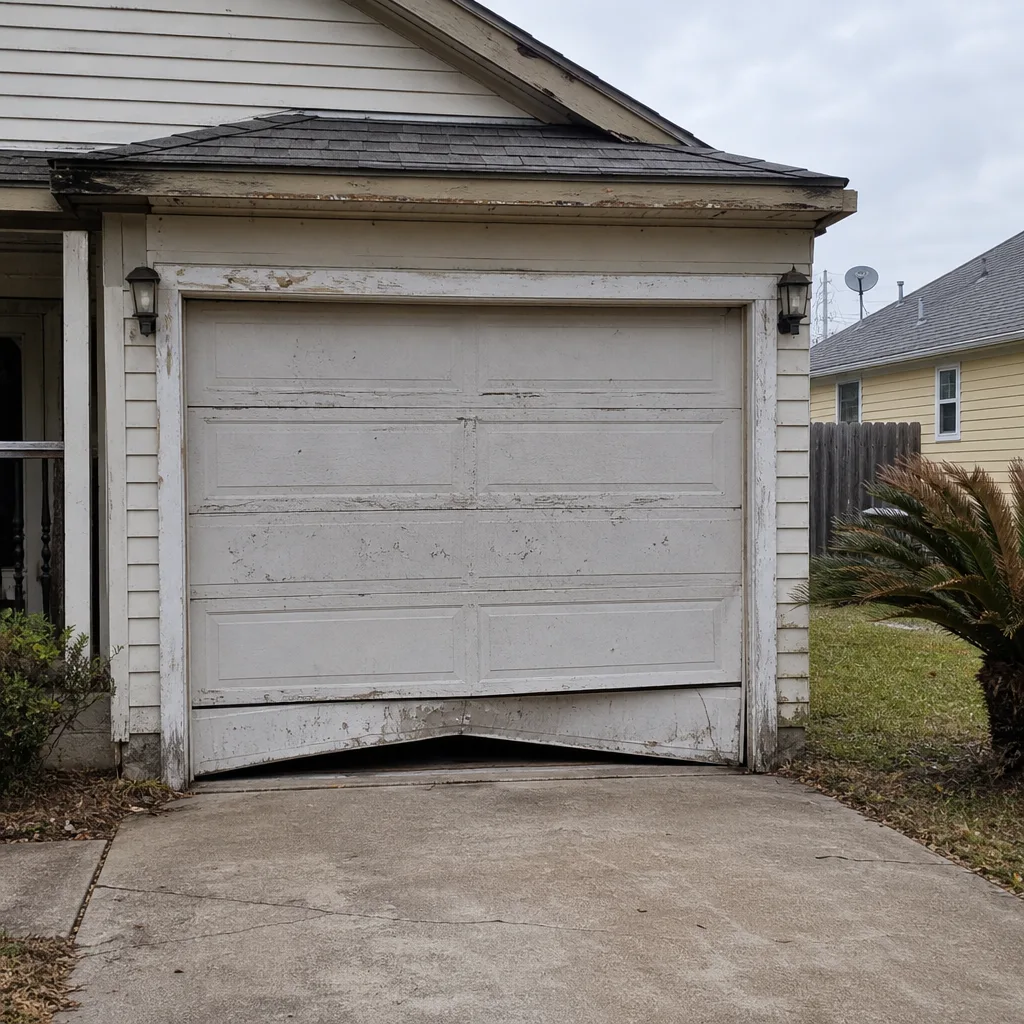 Before
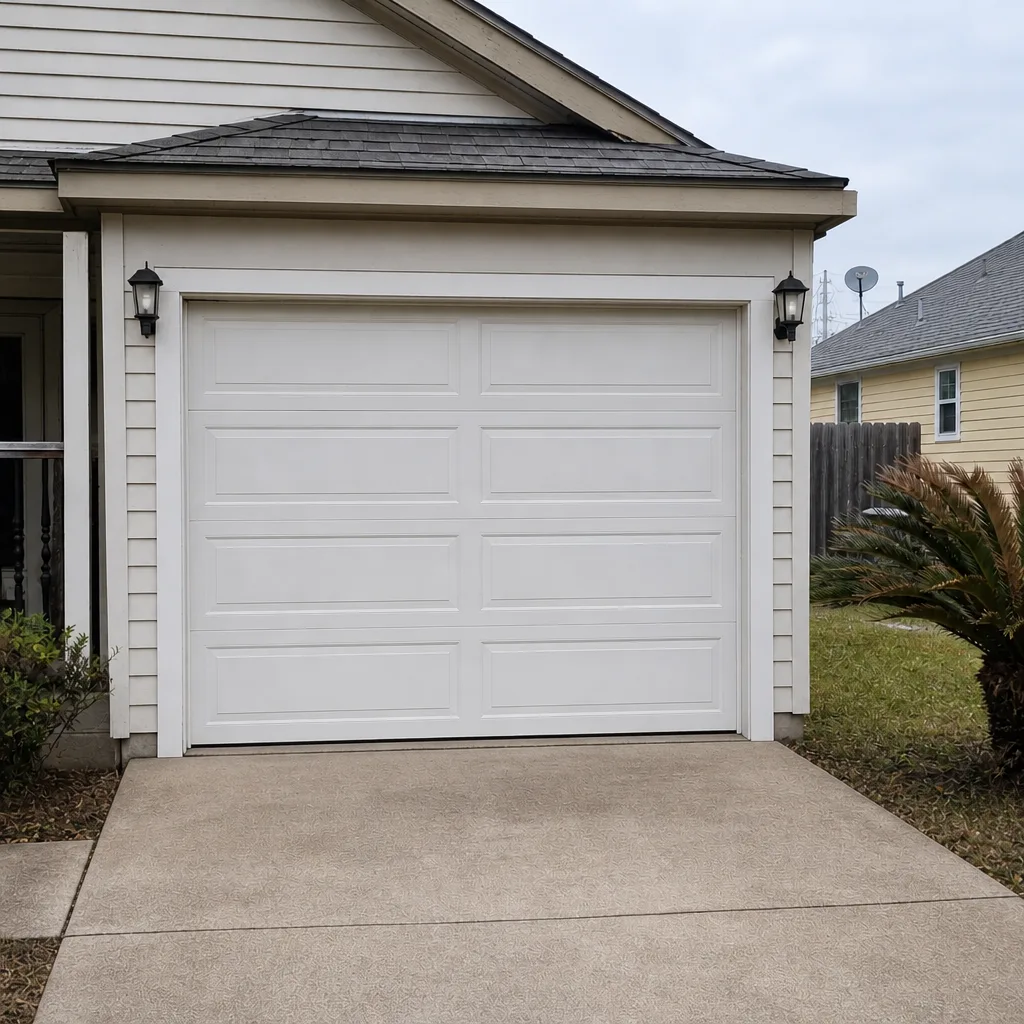 After
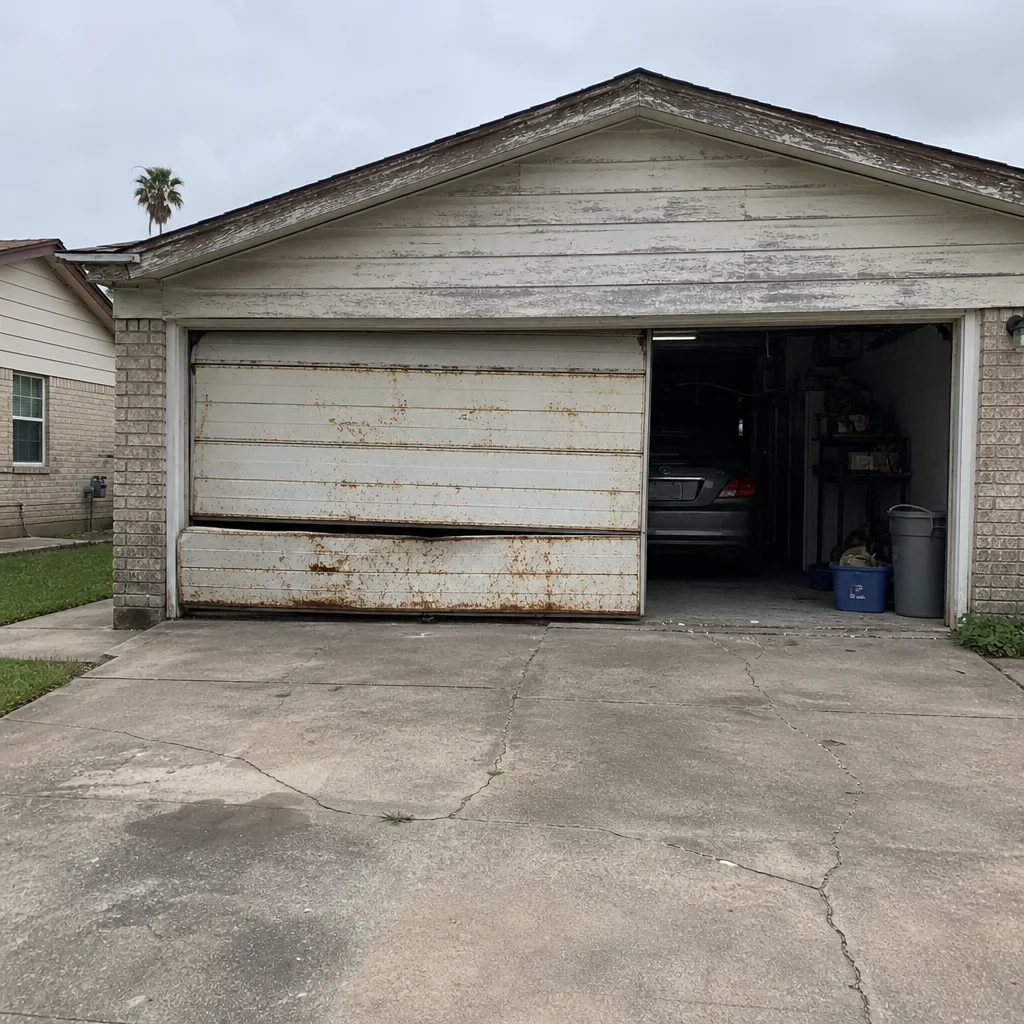 Before
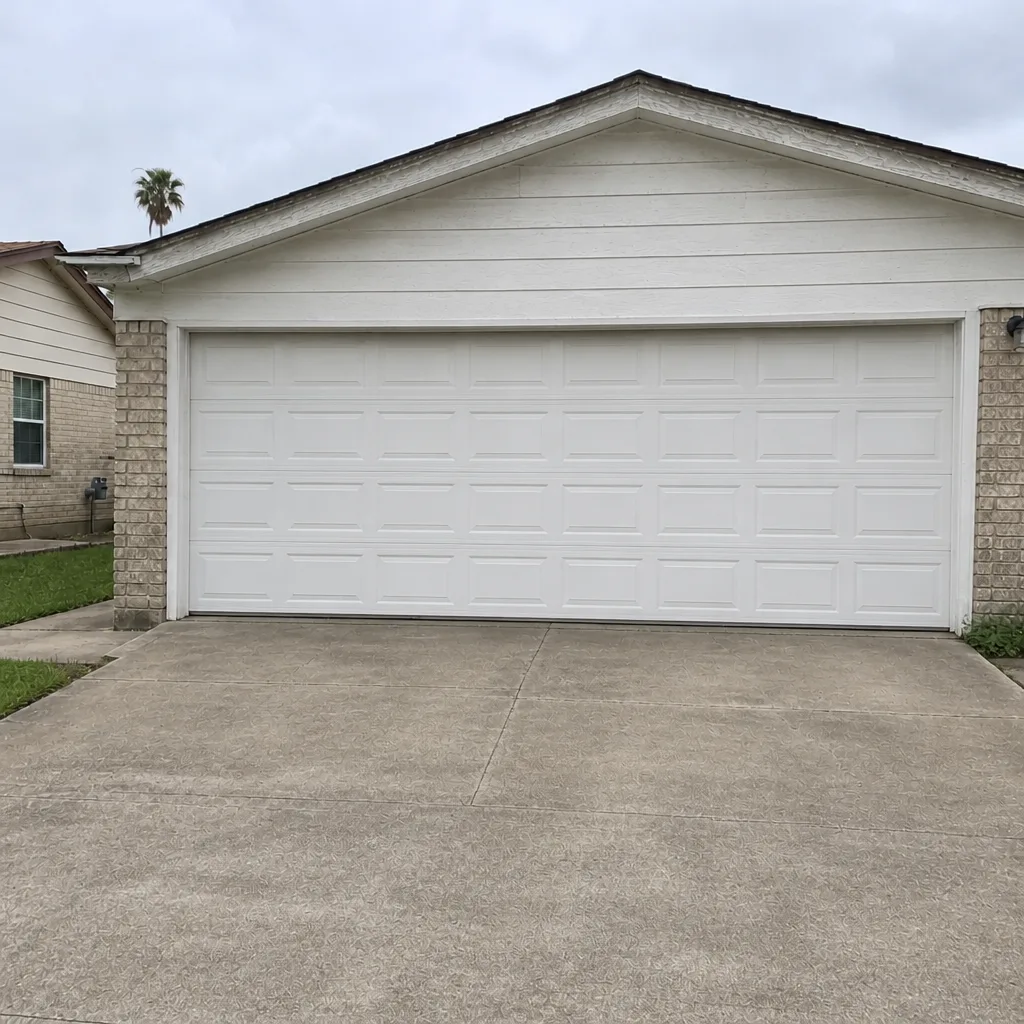 After
When to Call a Professional
Some garage door issues are genuinely DIY-adjacent: a squeaky roller, a misaligned track, a remote that needs a new battery. Others aren’t. When a torsion spring snaps, when a door comes off its track, when a door won’t close and you can’t get back in, or when the opener stops releasing the door from the inside, that’s the point to call. Broken springs, in particular, are under constant tension and should never be handled without the right tools and training. And an installation that needs a windstorm certificate should always be done by a contractor who can produce one.
Galveston Garage Door Repair Pros offers free estimates in Galveston. We can talk through what you’re seeing on the door, what the job involves, and what certification will look like. Call (866) 412-5303 for an estimate. Our technicians have up to 11 years of experience and work on the brand of door and opener you already own.
Frequently Asked Questions
In most cases, yes. Galveston County is inside the TDI windstorm inspection area, and a garage door replacement on a covered structure generally needs to be documented with a windstorm inspection certificate for the property to maintain or renew windstorm coverage. Verify the specific requirement with your insurer and lender before work begins, and make sure the contractor you hire can coordinate the certificate as part of the scope. If a contractor doesn’t know what a WPI-8 is, that’s not the contractor for a Galveston installation. Call (866) 412-5303 for an estimate and to talk through certification.
Ask directly whether there will be a windstorm inspection for the job, who arranges it, and whether you’ll receive the certificate when the work is complete. Ask for a sample of the certificate from a past job with personal information redacted, and confirm the requirement in writing with your insurer or lender. A contractor who has done this before will answer without hesitation. A contractor who has never done it will get vague. Estimates are free at (866) 412-5303.
Look for general liability coverage, workers’ compensation coverage (or a written exemption), and specifically “products and completed operations” coverage. That third line is what protects you against a defect that appears after the job is finished, which is exactly the risk profile of a door installation. Verify coverage is current by calling the insurer directly. Don’t sign a contract based on a certificate you haven’t read. Call (866) 412-5303 for an estimate that includes a written scope.
Ask for references from Galveston customers whose jobs were completed more than a year ago, verify the contractor has a local phone number and a verifiable address, and get warranty terms in writing. Refuse same-day pressure to sign or deposit, and ask directly whether the company handles windstorm certification. Out-of-area operators who arrive after storms usually fail one or more of these tests. Call (866) 412-5303 for a free estimate and we’ll walk through what certification involves for your property.
In some cases, yes, but it’s a coordination burden on you, and the inspector needs to see the work at the right stages. The simpler structure is to hire a contractor who coordinates the inspection as part of the installation scope, with the certificate delivery written into the contract. If you’re going to separate the two, make sure both parties know the sequence before any work starts. Call (866) 412-5303 and we’ll walk through which structure fits your situation.
At minimum: the exact door model and wind rating, a windstorm compliance clause, hardware specifications by finish and type, opener brand and model if applicable, a realistic timeline, a payment schedule tied to milestones, written warranty terms, and a cleanup provision. The phrase “per manufacturer specs” is legally and practically vague, and it doesn’t hold anyone accountable for certification or hardware quality. Call (866) 412-5303 for an estimate with a written scope you can compare line by line.
Pricing depends entirely on the job: a repair, an opener fix, a spring replacement, and a full installation are different scopes with different price ranges. Spring work is the most hazardous component and the one most often priced per spring, and matched pairs are usually replaced together. The best way to know what your job will cost is a written estimate after an on-site assessment. Call (866) 412-5303 for a free estimate; prices are quoted and agreed before any work starts.
No. Torsion springs are under constant tension and releasing that tension without the right tools and training can cause severe injury. Even experienced homeowners should not attempt spring replacement. A trained technician with the correct winding bars and safety procedures is the right call every time. Our spring repair service handles this as a safety-first job. Call (866) 412-5303 for an estimate.
The Bottom Line
Hiring a garage door contractor in Galveston is mostly a verification exercise, not a price comparison. Confirm the windstorm certificate can be delivered, confirm the insurance includes products and completed operations coverage, and get a written scope that names the door model, hardware, warranty terms, and certification responsibility. Do those three things and almost every other decision resolves itself. Skip them and the cheapest bid can cost you far more than you saved.
Start with your insurer, then call Galveston Garage Door Repair Pros at (866) 412-5303 for a free estimate and a written scope. Our technicians have up to 11 years of experience and work on the brand of door and opener you already own, from LiftMaster and Chamberlain to Clopay and Amarr. One call covers the door, the opener, the springs, and the installation, with the windstorm documentation handled as part of the job. For a broader view of what we do across the island, see our Galveston Garage Door Repair Pros home page.
Written by the team at Galveston Garage Door Repair Pros.