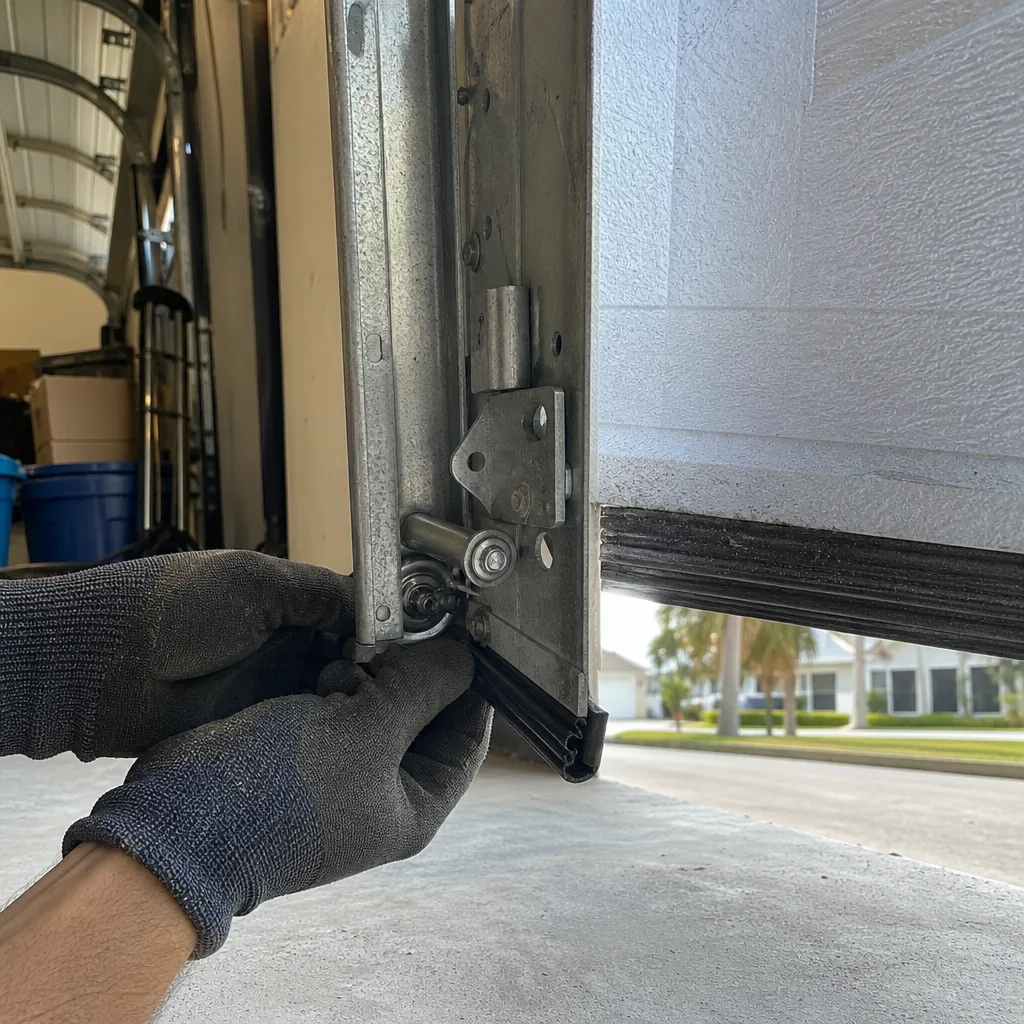
Last updated November 21, 2026
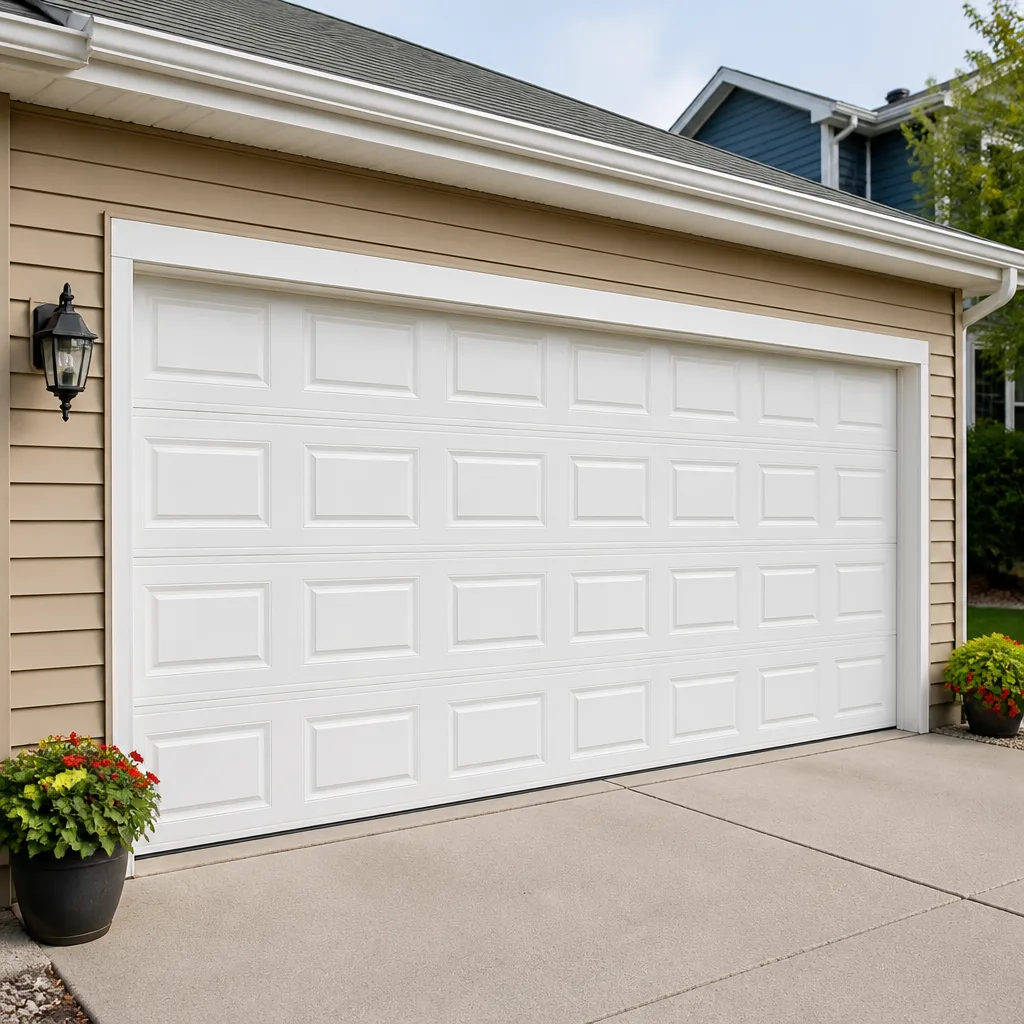 Raised-panel steel
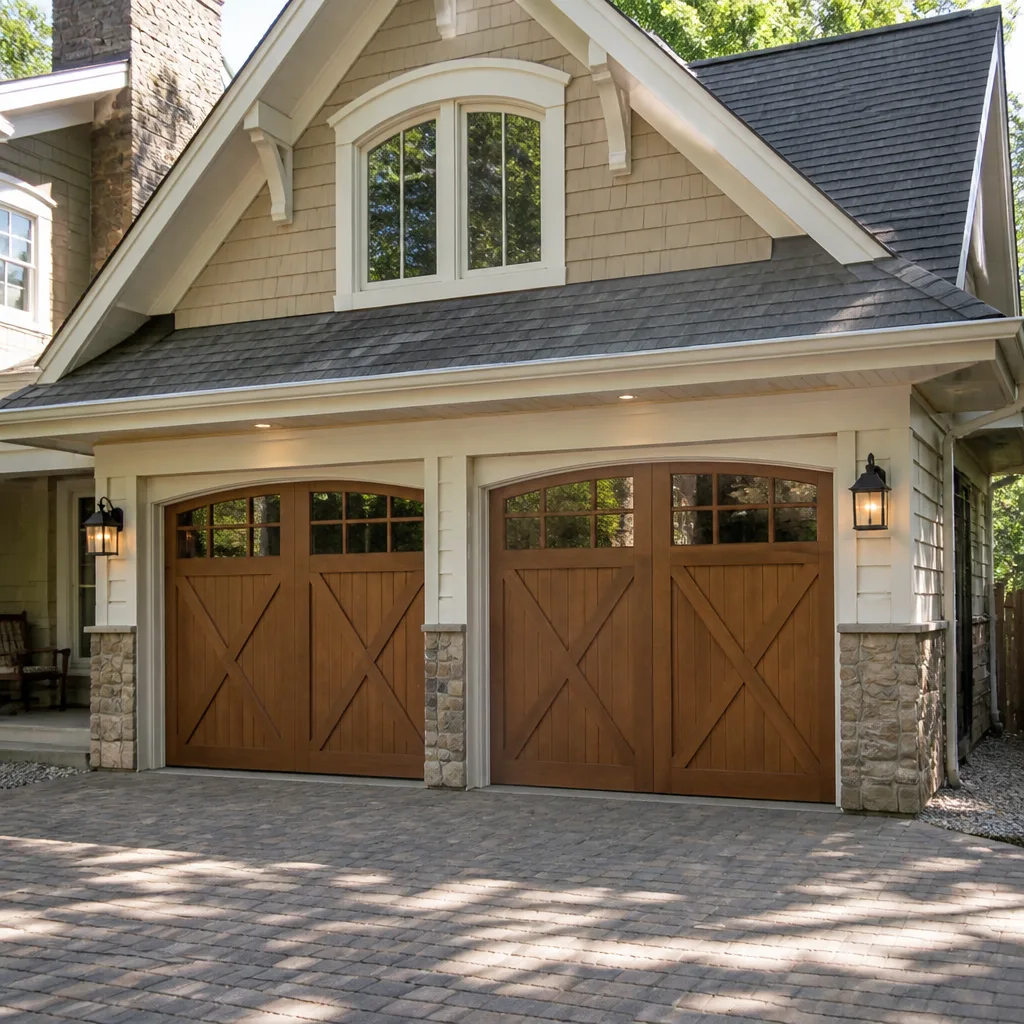 Carriage house
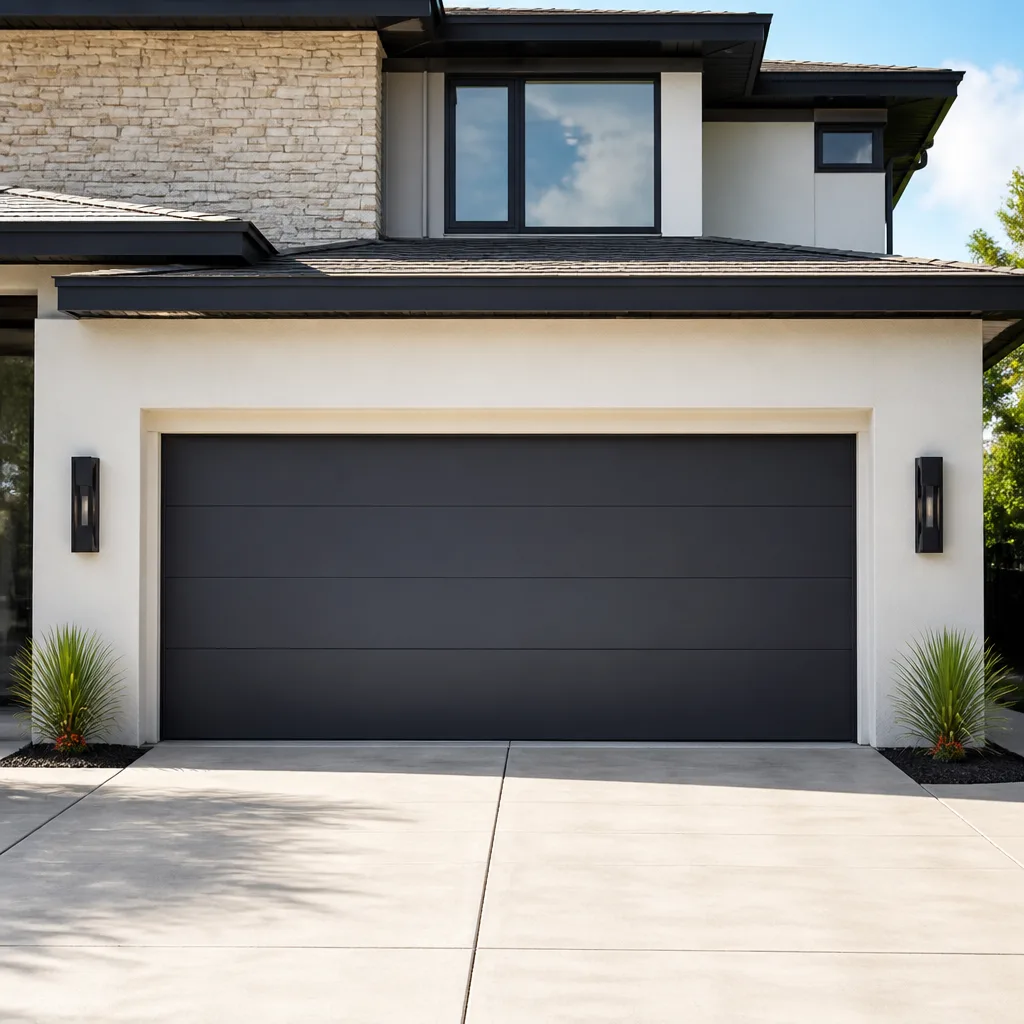 Modern flush
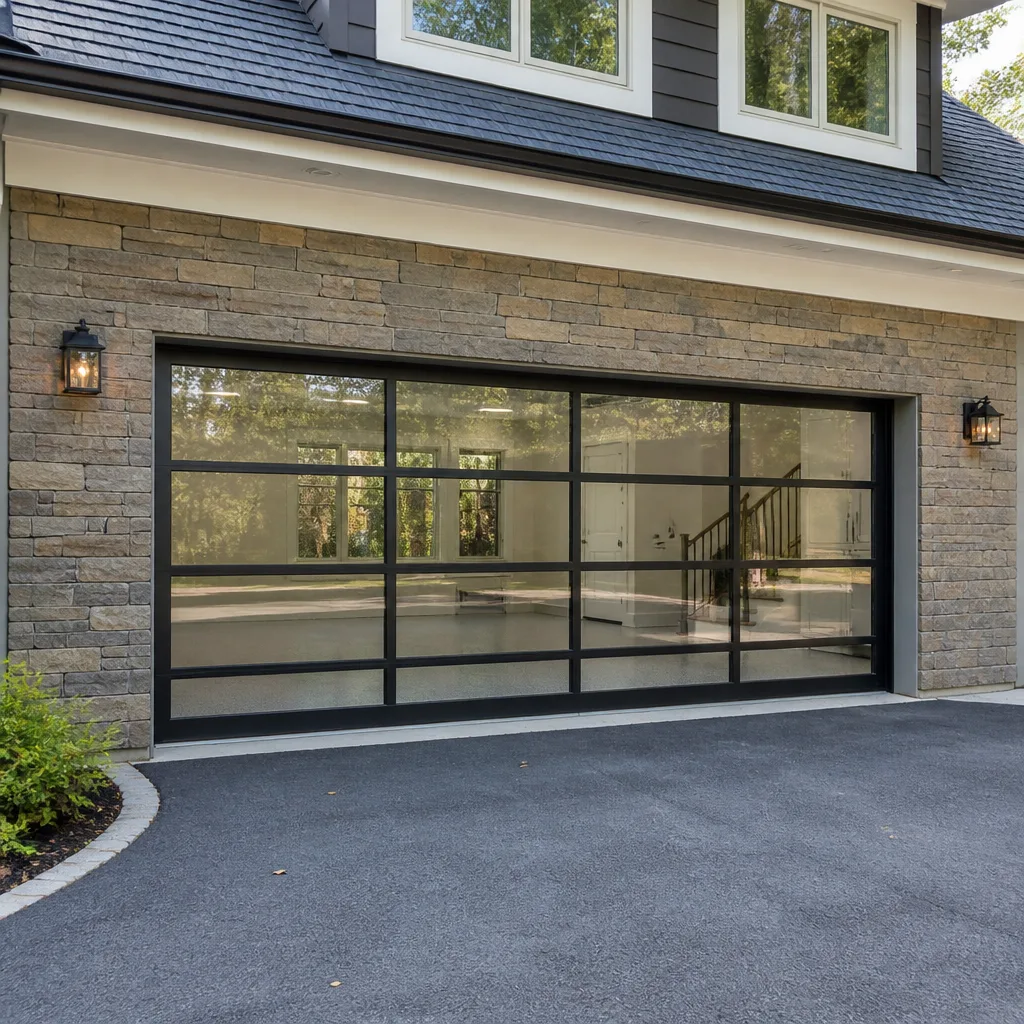 Full-view glass
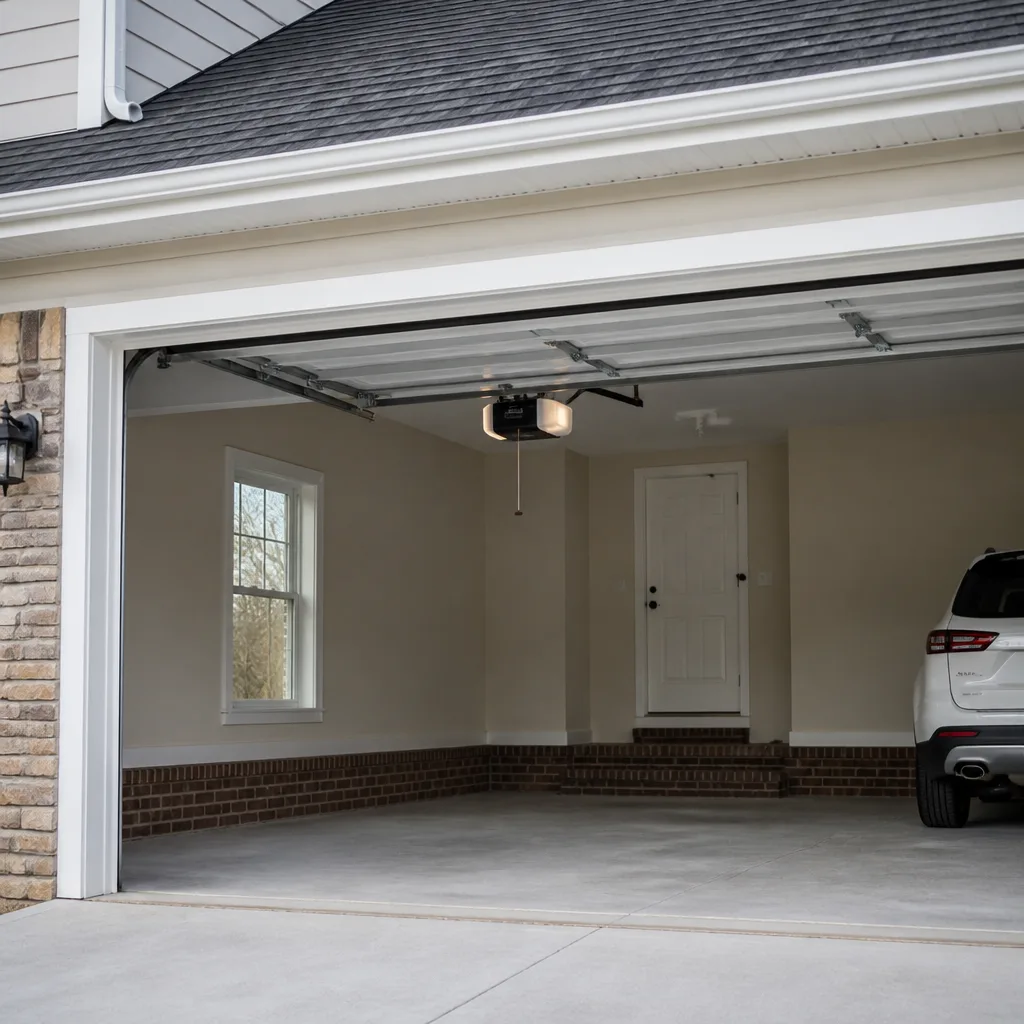 LiftMaster openers
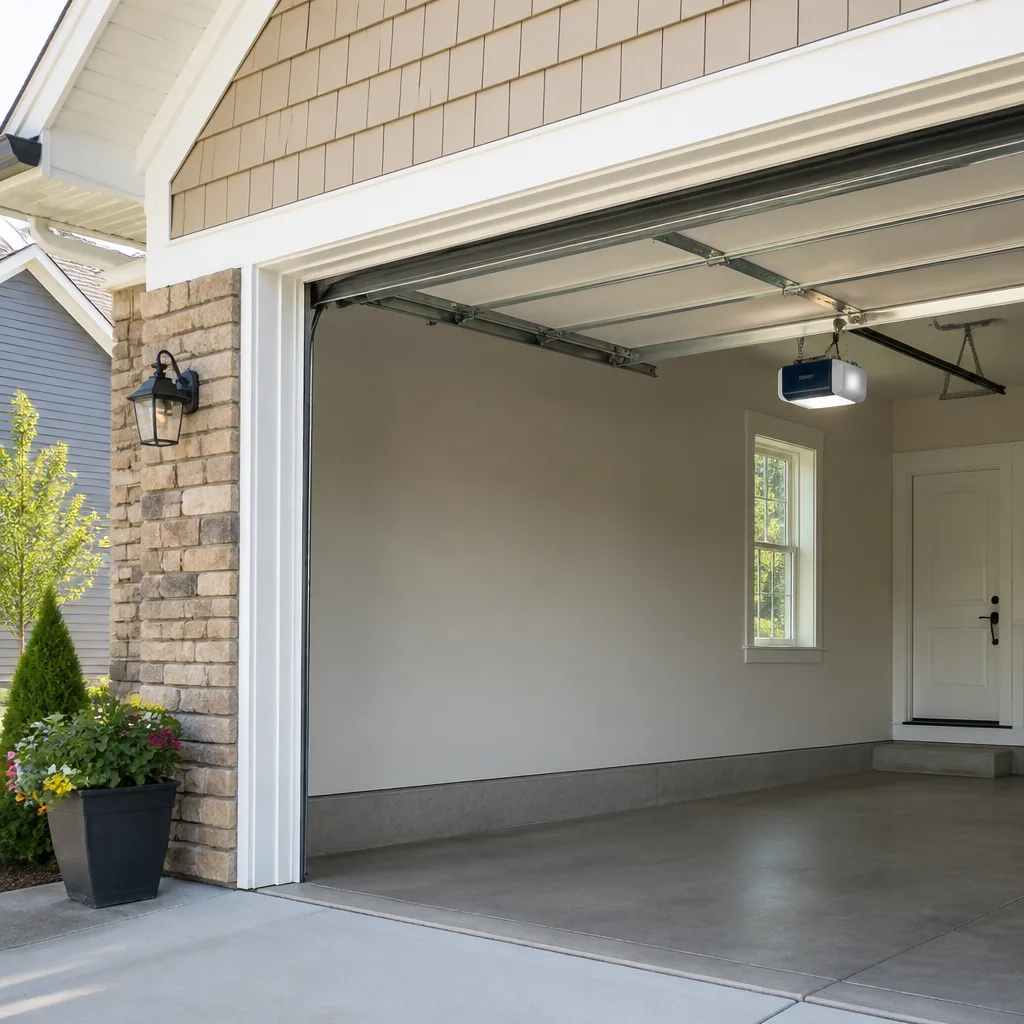 Chamberlain openers
Full 25-point door and opener safety check with every visit - springs, cables, rollers, tracks, and your LiftMaster or Chamberlain opener included
You get a price before we start. It does not change when the pro arrives.
Get your free estimateGarage Door Repair Maintenance Checklist for Galveston Homeowners
Most homeowners lube their garage door rollers once a year and call it done. On Galveston Island, hardware can seize completely inside that same window if salt deposits aren’t cleared off first. We’ve pulled hinges apart on Galveston doors that were greased faithfully every spring and still froze at the knuckle, because grease traps salt instead of shedding it. A calendar-based checklist, in other words, isn’t a maintenance plan here. It’s a schedule for finding out the hard way. This guide walks through the checklist we actually use in Galveston: what to inspect, in what order, which products survive Gulf humidity, how to check springs without standing under them, and what has to happen before storm season arrives. Read it once, keep it, and adjust the timing to the weather rather than a fixed quarter.
Quick Answer
A garage door maintenance checklist for Galveston should be organized around salt and storms, not seasons. That means rinsing salt off hinges, rollers and the bottom bracket after any storm or heavy onshore wind, inspecting torsion springs for corrosion from a safe distance, lubricating with a salt-shedding product rather than grease, and running a pre-hurricane check on reinforcement hardware and the manual release before storm season. A yearly lube-and-look works for inland homes; Galveston needs the rinse and inspection cycle tied to weather events.
Styles & brands we work with
- Raised-panel steel
- Carriage house
- Modern flush
- Full-view glass
- LiftMaster openers
- Chamberlain openers
Table of Contents
- Why Salt Changes the Maintenance Calendar
- The Salt-Rinse Protocol
- Inspecting Torsion Springs Without Getting Near Them
- Which Lubricants Hold Up and Which Make It Worse
- Weatherstripping and UV Degradation
- Pre-Hurricane Season Checklist
- The Monthly Walk-Around
- Brand-Specific Notes for Galveston Doors
Why Salt Changes the Maintenance Calendar
Galveston sits on an island in the Gulf, and every garage in Galveston is working in air that carries more salt than a checklist written for Dallas or Austin assumes. Salt doesn’t announce itself. It arrives as a fine film, settles on every unpainted surface, and waits. Humid air then holds that film against the metal instead of letting it dry off. The result is corrosion that starts in the places no one looks: hinge knuckles, roller stems, the bottom bracket, and the track where the rollers ride.
What that means practically is that the calendar matters less than the event. A door that never sees a storm may only need attention a few times a year. A door that catches a blow-through in August, or sits through three days of onshore wind in October, needs a rinse the following week whether the calendar says it’s due or not.
We think about Galveston maintenance in three cycles rather than one:
- Event-driven: after any storm, heavy onshore wind, or a long stretch of humid weather without a dry-out.
- Seasonal: a thorough inspection at the start of storm season and again when it ends.
- Monthly: the five-minute walk-around that catches problems while they’re still cheap.
Homeowners who only do the seasonal version tend to discover corrosion after it has already cost them a hinge set or a roller replacement. Homeowners who only do the monthly version miss the deeper checks. You want all three working together, and that’s the sequence the rest of this guide follows.
The Salt-Rinse Protocol
The single highest-value habit for a Galveston garage door is rinsing salt off the hardware after a storm event. Not wiping. Not spraying with a solvent. Rinsing with fresh water, then drying, then relubricating the points that the water stripped. The whole thing takes ten minutes and it’s the difference between hinges that last and hinges that seize.
Here’s the order that matters:
- Close the door and work from the outside first. Rinse the bottom seal, the bottom bracket area, and the lower track sections. This is where salt accumulates fastest because it’s closest to the floor and to splash.
- Move to the inside face. Rinse each hinge knuckle and each roller stem. Don’t blast directly into the torsion spring assembly; a gentle rinse on the surrounding hardware is enough and keeps water out of places it doesn’t belong.
- Dry the hardware. A rag or a quick pass with a leaf blower. Standing water in a humid climate is worse than no rinse at all.
- Relubricate the hinge points and roller stems using the products described further down. You’ve just stripped the protective film along with the salt, so this step isn’t optional.
- Wipe the painted face of the door with fresh water and a soft cloth. On a Clopay or Amarr steel door, the factory finish handles this well, but salt left on the paint dulls it over a season.
Do this after every storm that brings wind-driven moisture, and at least once a month through the humid stretches even without a storm. If you’re not sure whether your door needs it, run a finger along the bottom bracket. Gritty residue means yes.
For doors that have gone a long time without this routine, hinges and rollers can be corroded past the point where a rinse will help. That’s a repair conversation, not a maintenance one, and it’s covered on our garage door repair page.
Inspecting Torsion Springs Without Getting Near Them
Torsion springs are the most dangerous part of any garage door. They’re under enough tension to cause serious injury, and they fail suddenly and without warning. We handle spring work as a dedicated, safety-first service for exactly that reason. But you can and should inspect your springs visually, from a distance, on a regular schedule. The trick is knowing what to look for and where to stand.
Stand back and look up. From the floor, a few feet back from the door, you can see the full length of the torsion bar and the springs wound around it. You’re looking for rust, not detail. A light surface bloom is normal in Galveston. What you’re watching for is pitting, flaking, or a rust line that runs along the coil like a seam. Those are the marks that tell you a spring is losing material.
Also look for:
- Gaps in the coil. A spring that has stretched or begun to unwind can show visible separation between windings.
- A door that’s heavy or drops. If the door feels much heavier than usual when you lift it by hand with the opener disengaged, the spring is losing tension. Stop lifting and call.
- Loud bang from the garage. A spring that snaps makes a sharp report. If you hear it, don’t touch the door. Call for emergency service.
That’s the full extent of what a homeowner should do. No touching, no poking, no spraying lubricant into the spring coil. If you see corrosion that worries you, that’s a call, not a project. Our garage door spring repair page explains what replacement involves and why a matched pair is usually replaced together.
Which Lubricants Hold Up and Which Make It Worse
The wrong lubricant is worse than none in a coastal climate. Grease and heavy petroleum-based lubes trap salt and grit against the metal, hold moisture, and turn a hinge knuckle into a grinding paste. You want products that stay where you put them, shed grit, and don’t hold water.
What works well for Galveston doors:
- Silicone-based spray lubricant on hinges, roller stems, and the torsion bar bearings. It dries to a film rather than a wet coat, so grit doesn’t stick.
- White lithium grease in aerosol form on the track where rollers ride. Apply lightly and wipe off the excess. A thin film is right; a heavy coat attracts dirt.
- Dry PTFE (Teflon) spray on hinge knuckles if you want something that stays clean the longest. It’s the best choice for the bottom bracket area where splash and grit concentrate.
What to avoid:
- Heavy grease or bearing grease on hinges and rollers. It captures salt and grit and makes the problem worse over a season.
- WD-40 as a lubricant. It’s a fine water displacer after a rinse, but it isn’t a lubricant and it doesn’t last.
- Anything sprayed into the spring coil. Springs aren’t a lubricated surface and spraying them can hide corrosion you’d otherwise catch.
Whatever you use, wipe off the excess. A dry-ish film is what you’re after, not a wet coat.
Weatherstripping and UV Degradation
Galveston’s sun does a number on the bottom seal and the perimeter weatherstripping. UV exposure breaks down the rubber or vinyl over time, and the first sign is usually a seal that’s gone stiff, cracked, or crumbly at the edge. Once that happens, water gets in, the door rattles against a shrinking seal, and the gap at the floor lets in heat, humidity, and pests.
Inspect the bottom seal by running your hand along it (door closed) and looking for:
- Stiffness where it used to be flexible. A dry, hard seal isn’t sealing anything.
- Cracks or flaking at the edges, especially on the sun-facing side of the door.
- Visible gaps between the seal and the floor when you look from outside with the door down.
- Discoloration or a chalky surface on the rubber, which is how UV damage shows up before cracking.
The perimeter seal around the frame is easier to overlook but equally important. Check the vertical strips and the header seal for the same signs. If the seal is on a Wayne Dalton door with a proprietary bottom seal profile, replacement comes as a specific part rather than a generic cut-to-length strip, so knowing your brand matters when you go to replace it.
Seals are inexpensive parts; the cost of ignoring them is water in the garage and a door that no longer closes against the weather. If the seal has gone through several summers, plan to replace it before it starts letting in more than it should.
Pre-Hurricane Season Checklist
Storm season isn’t a maintenance season in the usual sense. It’s a time-sensitive window where specific checks have to happen, and they don’t overlap with anything else on the list. Run this checklist before storm season arrives, not after:
- Test the manual release. With the door closed, pull the red release handle to disengage the opener, then lift the door by hand. It should move smoothly with moderate effort. Re-engage before testing the opener. If the door is too heavy to lift or won’t stay open, the spring is failing and that’s an urgent repair before a storm.
- Check the reinforcement hardware. Look at the hinges, brackets, and the door’s horizontal and vertical stiles for loose bolts, cracked brackets, or a bracket that’s pulled away from the panel. Storm force finds weak attachment points first.
- Inspect the track alignment. A track that has drifted, dented, or loosened will rattle and strain under load. Run a hand along the inside face of each track to check for dents. If the door binds when you raise it by hand, the track needs attention.
- Confirm the seal at the floor. A tight seal reduces the chance of wind-driven water getting under the door during a storm.
- Check the opener’s battery backup if it has one. LiftMaster and Chamberlain openers commonly include a battery backup; if yours does, verify the battery is intact and holding charge before storm season. Genie Aladdin Connect units should have their smart-home connection confirmed so you can check door status remotely.
If anything on this list turns up a problem, address it before the season. A door that works in calm weather but fails in a storm is telling you something. Our garage door opener repair page covers opener issues that affect release and battery backup.
The Monthly Walk-Around
The five-minute monthly check catches most small problems before they cost real money. It’s the cheapest maintenance in the whole guide because it takes so little time and it catches the failures that happen silently.
- Open and close the door and listen. A properly running door is quiet. Grinding, squealing, popping, or a rattle that wasn’t there last month is your cue to look closer.
- Watch the door travel. It should move evenly in both directions with no hesitation or jerking. A door that stutters is usually a track or roller problem.
- Check the safety reverse. With the door closing, wave something in front of the photo-eye sensors. The door should reverse. If it doesn’t, the sensors are misaligned or dirty, and that’s a safety problem worth fixing this week.
- Test the balance. Disengage the opener, lift the door halfway, and let go. It should hold roughly where you put it. A door that drops means the springs are losing tension.
- Wipe down the bottom bracket and hinges with a damp rag. This is the light-touch version of the full rinse, and it catches salt before it starts working.
- Look at the spring from the floor. Same as the section above, just a quick glance for new rust blooms.
Do this once a month and most of what a checklist is supposed to catch will never get past the first visit. The other sections are the deeper work.
Brand-Specific Notes for Galveston Doors
Brand knowledge matters more than most checklists admit. The door and the opener are separate pieces of equipment, and knowing which is which saves time when something goes wrong.
On the door side, Clopay and Amarr steel doors handle Galveston’s conditions well if the bottom seal and hardware are maintained, but the bottom bracket and roller stems are the parts that go first. Wayne Dalton doors sometimes use proprietary profiles for the bottom seal, so replacement parts aren’t interchangeable with generic strips. Knowing the brand on the door means getting the right part on the first try.
On the opener side, we work on LiftMaster and Chamberlain systems, Genie units including Aladdin Connect, and legacy Craftsman openers. If your opener is smart-enabled, confirm the app connection as part of your storm-season check; if it’s a legacy Craftsman unit, watch for a wall control that’s stiff or a remote that’s losing range, both of which point to internal wear before a full failure.
We’re factory-familiar with eight major residential brands: LiftMaster, Chamberlain, Genie, Clopay, Amarr, Wayne Dalton, Craftsman, and Raynor. That means when a Galveston door or opener has a problem, we know the hardware, the parts, and the failure points before we’re on site. It saves a diagnostic trip and it means the fix is right the first time. For the full picture of what we handle, start at Galveston Garage Door Repair Pros.
Common Mistakes to Avoid
- Greasing hinges instead of using a dry lubricant. Grease holds salt and grit in Galveston’s humid air and turns hinge knuckles into grinding surfaces. Use silicone, dry PTFE, or a light lithium film instead.
- Skipping the rinse after a storm. A cleanup that’s due on a calendar is not the same as a rinse that’s due after an event. Salt sits against hardware for days if it isn’t washed off.
- Spraying lubricant into the torsion spring. Springs aren’t a lubricated surface. Spraying them hides the corrosion you need to see and can let a failing spring go unnoticed.
- Trying to adjust or replace a torsion spring yourself. This is the most dangerous job on the door. A spring that’s under tension can cause serious injury. Call a professional for anything beyond a visual inspection.
- Ignoring a door that’s balancing wrong. A door that won’t hold at the halfway point has spring tension problems. Don’t keep cycling it; get it looked at.
- Assuming a generic bottom seal will fit. On a Wayne Dalton door the profile may be proprietary. Know the brand before you order a replacement.
- Waiting until after the storm to run a pre-storm check. Manual release, reinforcement hardware, and battery backup are checked before, not after. After a storm it’s too late to prepare.
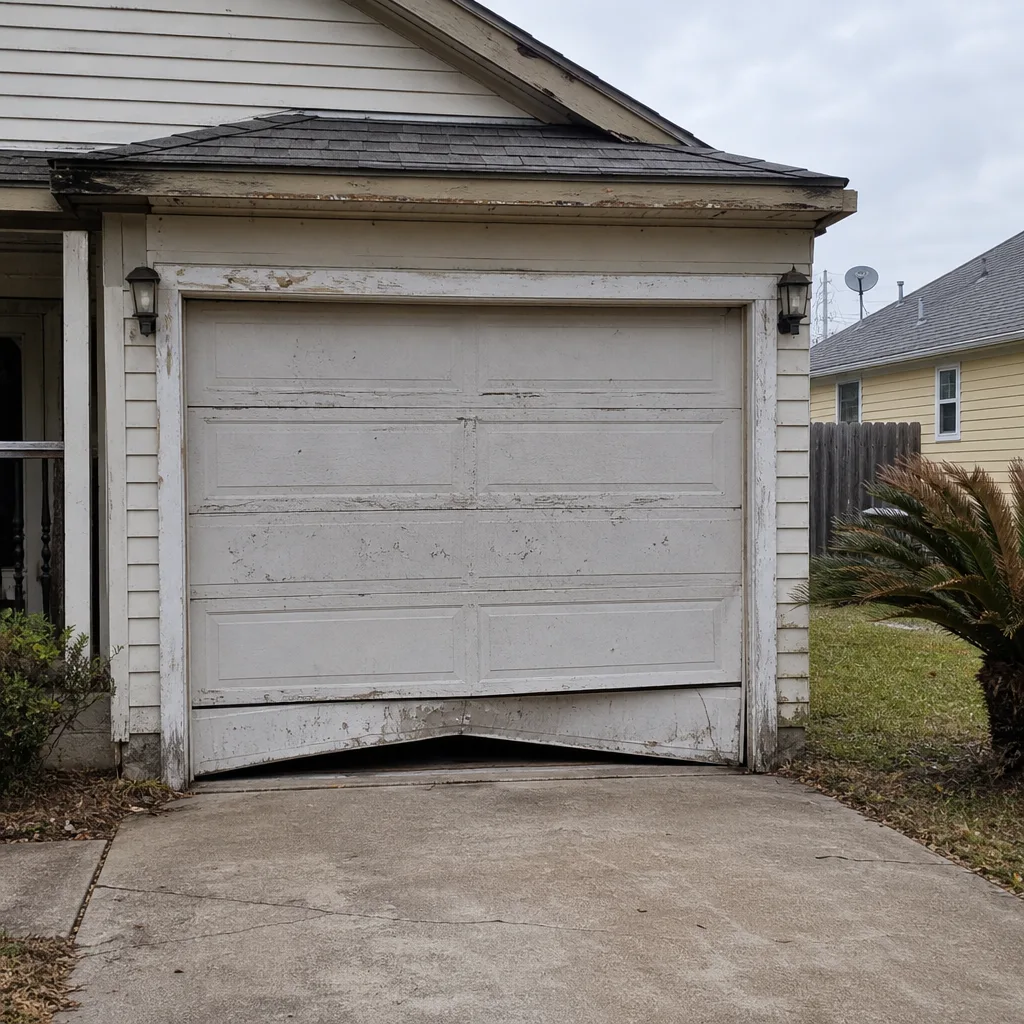
See the difference
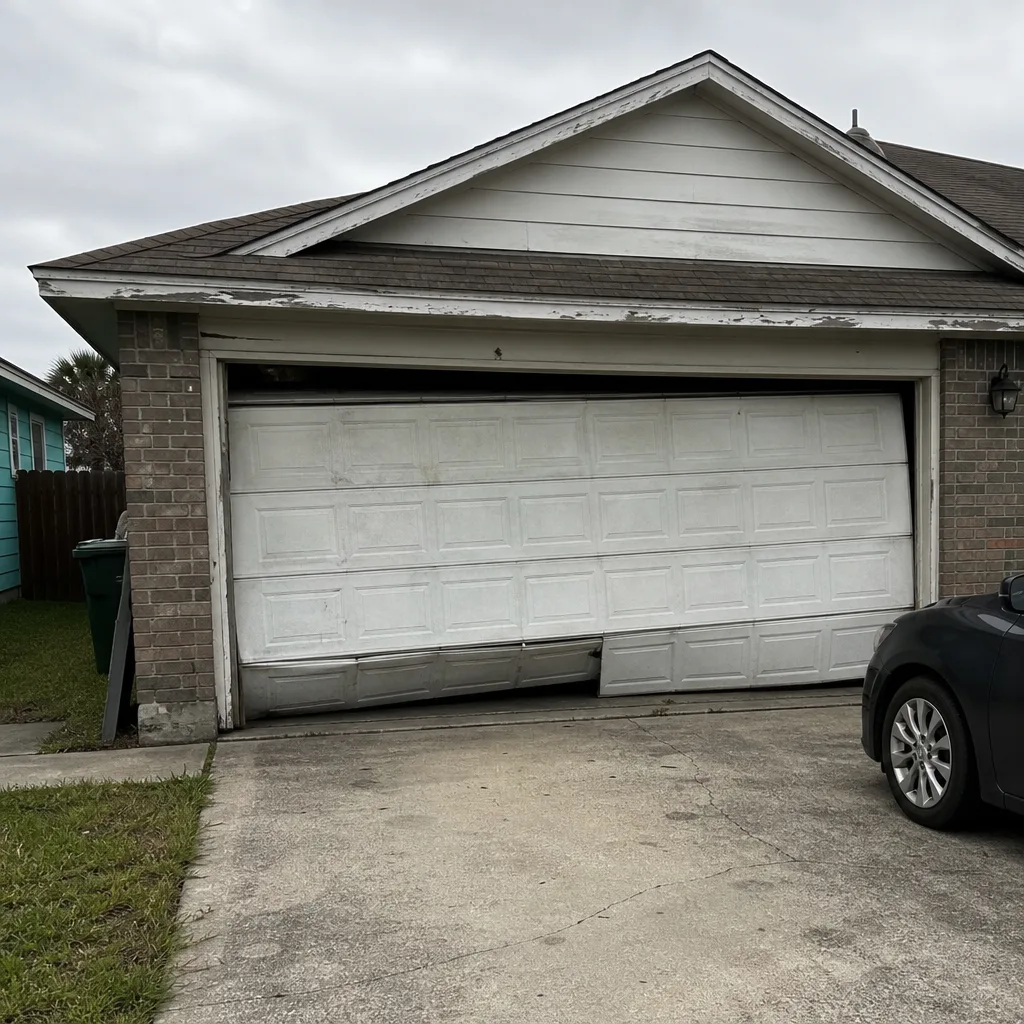 Before
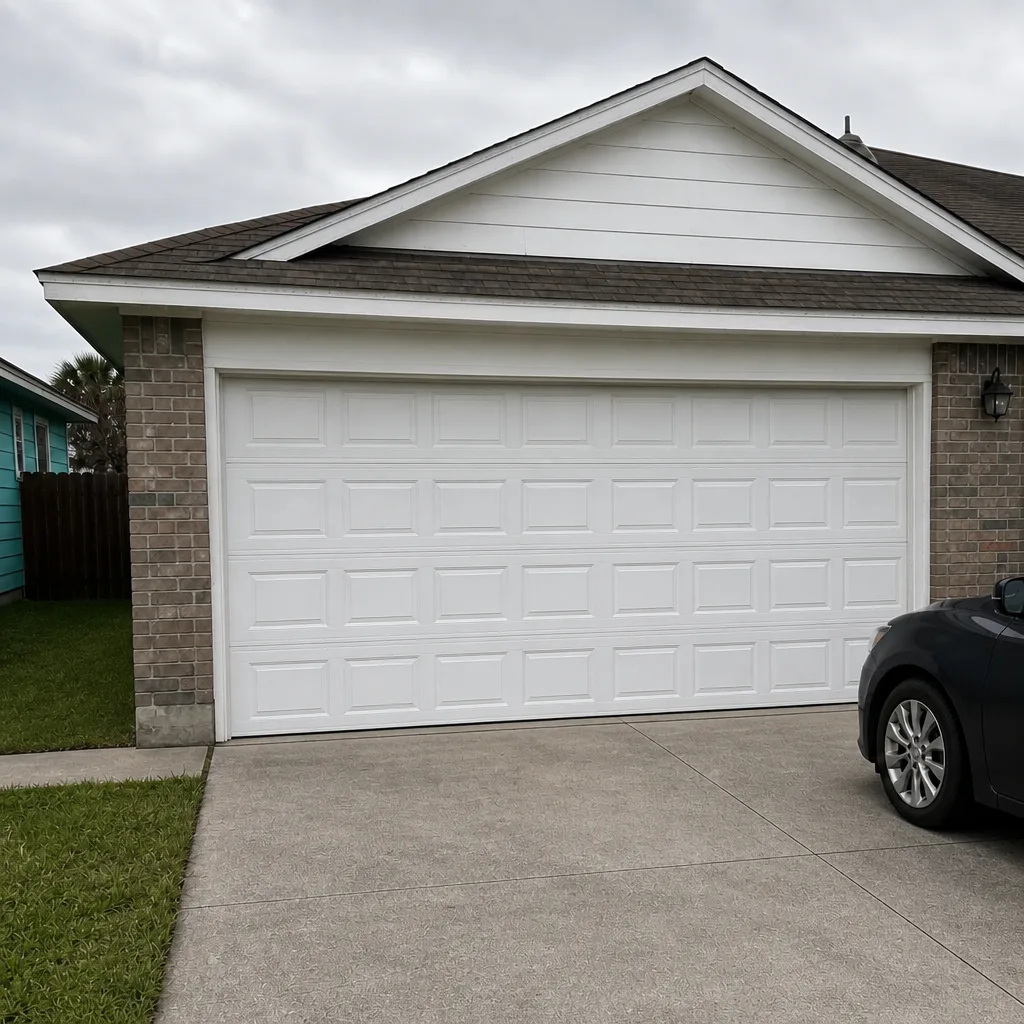 After
 Before
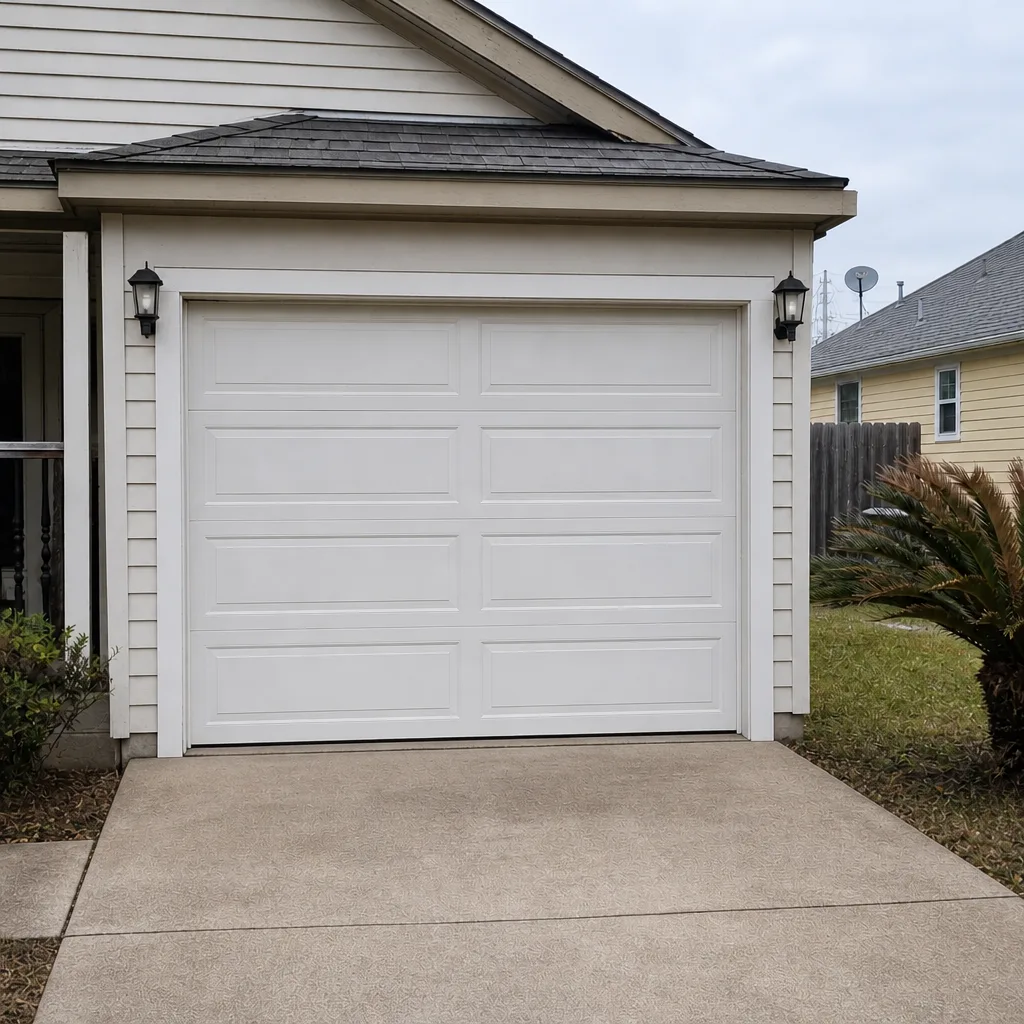 After
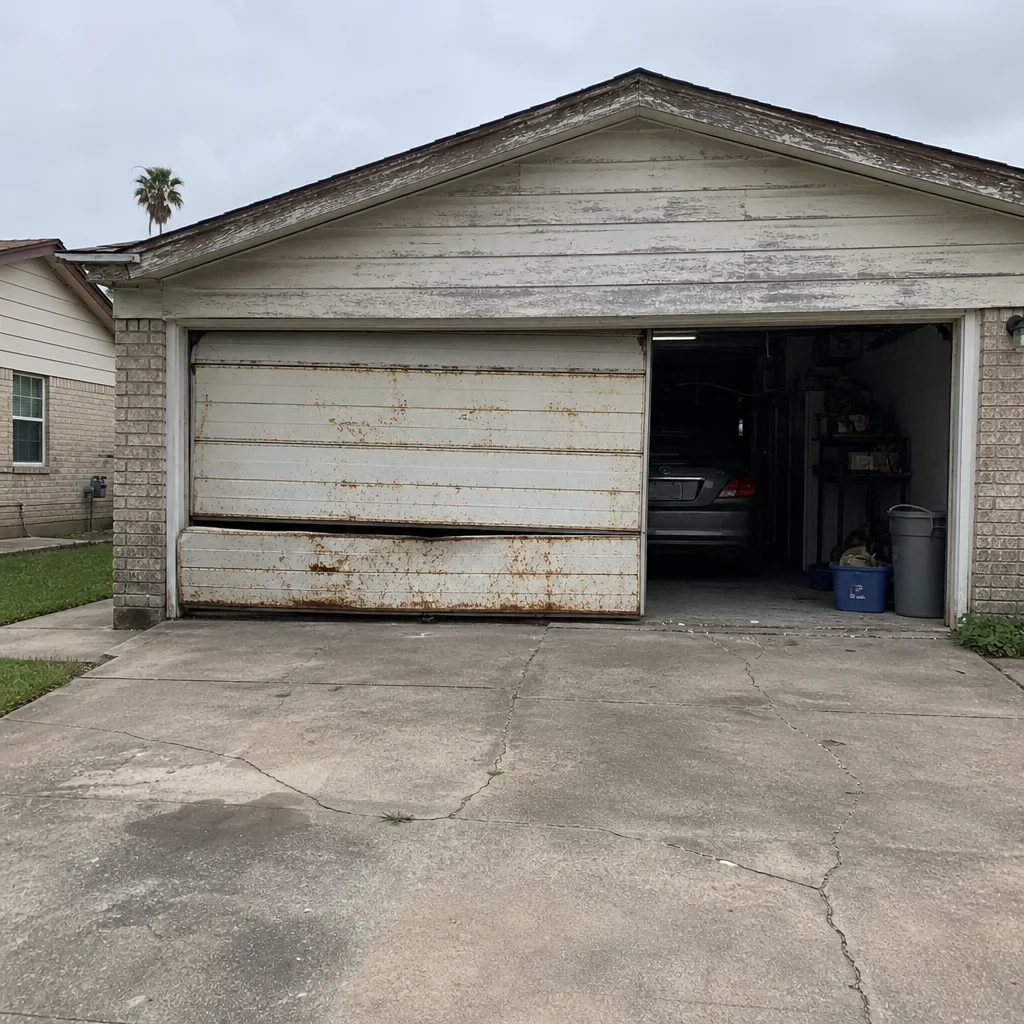 Before
 After
When to Call a Professional
Call a professional when anything touches the spring system, when the door is out of balance, when a torsion spring has snapped, when the manual release won’t engage or disengage properly, or when a track is bent, binding, or pulling away from the door frame. Call when a door is stuck open in bad weather and you can’t safely get it down. Call when an opener fails to disengage or reverse. Call before storm season if the pre-hurricane checklist turns up anything you’re not confident handling yourself. Galveston’s salt and storm cycles put more stress on doors than most inland homes ever see, so a problem that looks small in calm weather is worth having looked at before the season turns. Galveston Garage Door Repair Pros offers free estimates in Galveston: call (866) 412-5303. Our technicians have up to 11 years of experience, and we work on LiftMaster, Chamberlain, Genie, Clopay, Amarr, Wayne Dalton, Craftsman, and Raynor equipment.
Frequently Asked Questions
Every one to two months for the hinges and roller stems, and again immediately after any full rinse. Galveston’s humid air and salt load strip lubricant faster than a dry inland climate, so the standard twice-a-year advice is too sparse here. If the hinge knuckles feel dry or the door squeaks, it’s time, regardless of the calendar. Call (866) 412-5303 for a free estimate on any repair.
You can and should look at it from the floor, but you should never touch it, spray it, or work near it. Look for rust blooms, pitting, gaps in the coil, and drop or sag in the door’s balance. Anything beyond a visual inspection is a job for a trained technician because springs are under serious tension and fail without warning. Call (866) 412-5303 for an exact quote; estimates are free.
Most common repair jobs in Galveston fall somewhere in the $150 to $450 range depending on the part and the labor, and spring work runs higher because it’s a dedicated, safety-first job. Every job is quoted and agreed before any work starts, so the written estimate is the price you’ll pay. Call (866) 412-5303 for a free estimate; the written quote sets the final price.
No. The written estimate we give you is the price for the work, and we quote and agree it with you before any work starts. If we find something additional while on site, we tell you about it and get agreement before doing anything further. You’ll never get an invoice larger than the number you agreed to. Call (866) 412-5303 for a free estimate.
UV damage shows up as stiffness, a chalky or discolored surface, cracks at the edges, or a seal that no longer closes against the floor. Galveston’s sun is intense enough that the bottom seal on an exposed door typically needs inspection once a year. If it’s stiff and cracked, plan to replace it before it lets water into the garage. Call (866) 412-5303 for a free estimate on seal replacement.
Manual release operation, reinforcement hardware condition, track alignment, floor seal tightness, and opener battery backup (if your opener has one). Run these before the season arrives, not after; once a storm is on the way it’s too late to prepare. If any of them is off, get it fixed ahead of time. Call (866) 412-5303 for a free estimate on any repair.
The Bottom Line
Galveston doesn’t need the generic garage door checklist that gets reprinted everywhere. It needs the salt-rinse protocol after storms, the monthly walk-around, the visual spring inspection from a safe distance, a dry-film lubricant instead of grease, and a pre-hurricane checklist run before storm season, not after. Do those five things and most of the corrosion and balance problems a printed checklist can’t catch won’t get a chance to start. Our garage door spring repair, opener repair, and new-installation work all follow this same sequence, and our technicians have up to 11 years of experience working on the brands you already own. If something on this list looks off, call (866) 412-5303 for a free estimate. We’ll tell you what it is and what it takes to put it right.
Written by the team at Galveston Garage Door Repair Pros.